Showing posts with label 2010. Show all posts

Buddha Mountain 观音山 (Guan Yin Shan) [2010] • China

By-the-numbers indie. I didn't believe any of the actors made contact with the feelings the characters were supposed to be feeling because everything comes off as an impression, rather than anything of substance. Li Yu, who directed 2007's wonderful Lost in Beijing, doesn't seem to have a story to tell here, as much as simply having a desire to make a film in this style, and feature disillusionment as a theme. The hand-held camera-work didn't bother me, but the framing and composition of shots did. They seemed forced and almost precious, and the actors merely vogued their way through scenes.

Fan Bingbing, who was so good in Lost in Beijing, her first film with director Li, seems to treat this one like it's automatic art-house street cred. The story is uninspired: Three young drifters meet a single mom who is still mourning the death of her only son, and they all have an angst competition. That should be indie grill; it's not in this case. It's just shots of people pensively staring off into space, and scenes of people pensively walking around aimlessly while the fog rolls by and the music meanders. Indie film school 101. It was very hard to finish this film because I didn't care about any of the characters. Caring about characters may not be necessary, although the director clearly hoped for it, so I'm going to make up a word to describe my experience, to differentiate it from not caring. I discared  the characters.

★★
Director: Yu Li
Starring: Sylvia Chang, Bo-lin Chen, Bingbing Fan, Helong Wang

IMDb
Asianmediawiki

Hot Summer Days 全城熱戀 (Chuen sing yit luen - yit lat lat) [2010] • Hong Kong, China

I laughed, I cried. This is a very fun, good looking, popcorn/date flick. Beneath its light-hearted surface there are some teary eyed love happenings. If you like star-studded Hong Kong romantic comedies and sugar-coated sentimentality, look no further.

Hot Summer Days tries to be cross-cultural by setting two of its four main story lines on the mainland but it's more in the tradition of Hong Kong rom-coms than mainland fare. Most of the actors are native Cantonese speakers. I watched this twice, once with the Mandarin audio and once with the Cantonese audio. There is some dubbing in both versions but the Cantonese version has less of it.

The eye candy comes in both flavors: boy and girl. They perspire a lot which leads to some clingy clothing, glistening skin, and probably the PG (or its Chinese equivalent) rating. Vivian Hsu has never been more freakishly cute and Barbie Hsu has never been more tattooed. The most heartwarming and intricate tale is that between Jacky Cheung, as an out of work truck driver cum ice cream salesman, and Rene Liu, as a concert pianist doing foot massage (because it's a job requiring skilled hands), which gets its start from a text message sent to the wrong number. The one that anchors the film and produces the most tears is the one, not given top billing on the poster, between newcomer Xinbo Fu, as an innocent country boy and Angela Baby (that's right, her name is Angela Baby), as a factory worker assembling teddy bears. Daniel Wu, as Master Soy Sauce, and Vivian Hsu, as Wasabi, have the cutest nicknames. Nicholas Tse and Barbie Hsu's story is the most hip and tragic.

There are cameos galore, the highlight being a weepy-eyed monologue from Maggie Cheung spilling her guts to Master Soy Sauce. Blah blah blah. If this is your cup of tea, drink it. It's good (except for some well intentioned CGI maybe). I hope I got all the links right.

★★★★
Director: Tony Chan, Wing Shya
Starring: Nicholas Tse, Jacky Cheung, Rene Liu, Vivian Hsu, Barbie Hsu, Angela Baby, Daniel Wu

IMDb
Wikipedia
Asianmediawiki

Norwegian Wood ノルウェイの森 (Noruwei no mori) [2010] • Japan

I let myself get over-hyped about this one: Director Anh Hung Tran's The Vertical Ray of the Sun is one of the most beautiful films I've ever seen; Cinematographer Ping Bin Lee, one of my favorites; Jonny Greenwood doing the soundtrack. Almost every publicity blurb about this movie starts off with "Upon hearing the song "Norwegian Wood," Toru remembers back to his life in the 1960s ..."

Well ... that blurb may describe the book but it has nothing to do with this film. I'm not a Beatles fan but I do carry a bunch of love for that song and it does bring with it a great sense of nostalgia. Somebody paid somebody a bunch of money to play that song over the end credits, all for naught. There isn't any real sense of nostalgia in the film except for some of the fashion and the big telephones. I let myself be mislead.

Greenwood's soundtrack might be interesting to listen to by itself but in the film all the lilting strings manage to seem bombastic. I literally muted the film several times it annoyed me so much. I don't think this is Greenwood's issue, though. Tran has been known to over-saturate a film or two with torturing soundtracks (The Scent of Green Papaya). Ping Bin Lee did come through. There are many breathtakingly beautiful scenes in the film, a few of which played silently for me because of the aforementioned soundtrack's habit of shitting all over the film.

I do not like Rinko Kikuchi's acting. I've seen her in a handful of films and while she gets some moments right, she often brings too much of her blonding international star self to roles (even before she had it) and I struggle to see a character beyond her personality. She whispers a lot which is a phony way to be dramatic done by people, strangely, desirous of attention. If they have your attention a little bit they can force you to double it by whispering. Fortunately she is only half the focus of the film. Texas born Kiko Mizuhara is awesome as the main "other" girl, Midori, in Toru's life. She's cute, spunky, forward, sexually confident, and blunt, but comes off as merely an outline of a character. I wish the whole film were about her. Ken'ichi Matsuyama, as Toru, is serviceable as the supposedly nostalgic one but hardly awesome enough to be a guy that three different girls just have to fuck. Gorgeous Eriko Hatsune has a nearly film-stealing scene but that's about all we see of her.

The film contains some rather bold, and funny at the same time, sexual dialog, although it's a little sore-thumbish because the film is only punctuated with it. I loved it, and laughed, when Midori calls up Toru and says "My dad died. Will you take me to a porno film? The most perverse one." She also has a few moments describing to Toru how she'd like to be bedded by him which are entertaining. Kikuchi's Naoko, after letting Toru know that she's too crazy with despair to sleep with him asks him if it's torture to have an unserviced erection: "I can help with that", she then offers. There is a good bit of sadness and mixed up desire in the film but the characters and the story aren't developed enough to see it as more than immature angst.

I think this film will appeal to teenagers and twenty-somethings who've read the Haruki Murakami novel it's based upon because most of the holes in the film will be filled in and the sense of nostalgia might be there. Not that teenagers have a lot of nostalgia for the sixties but the film is about loss, and it is fairly good at presenting that—except the adolescent level of it is pretty thin. The film is NOT about the way things were—the last few wonderful lines of the film and a Beatles tune can't save it. It's just a young-love story which lacks the depth to appeal to those not feeling the same way, i.e., older folks. Young people experiencing the whirlwind of sexual awakening, and or those who've had a friend commit suicide, might love it.

Norwegian Wood is a great looking film but not well written or acted, and since it is also quite slow moving I don't think it will engage general audiences who haven't read the book. It's not sexy enough nor smart enough.

★★★
Director: Anh Hung Tran
Starring: Rinko Kikuchi, Ken'ichi Matsuyama, Tetsuji Tamayama, Kiko Mizuhara, Reika Kirishima, Eriko Hatsune

IMDb
Wikipedia
Asianmediawiki

Winter's Bone [2010] • USA

"Here's a doobie for the road". Haven't heard that one in years. I wasn't sure if I was going to be able to sit comfortably through a couple hours of hillbilly meth heads mumbling through their problems, but Jennifer Lawrence's performance doesn't take long to latch onto. Then Uncle Teardrop shows up. John Hawkes, as Teardrop, nails the role of resident scary guy, and he almost steals the show. A young man of slight physical stature, he is nonetheless able to project frightening unpredictability and intimidation. His character is very well written with a broad development arc, from violent to thoughtful to playing the banjo. The film is worth seeing for Hawkes's performance alone, but it's got a lot more to offer.

Winter's Bone, on the surface, is a backwoods family drama about drug culture, but it's also a good mystery thriller. There are some obvious and unnatural "dialog as character development" moments, and a few scenes inserted to show a little down home familial love and bonding which are a slight cause for pause, but the overall pace is fairly swift and they are easily forgiven, especially when the it rolls out one of the saddest, most thought-provoking endings to a film I've seen in a long time ... well, at least since Confessions. And it's John Hawkes who delivers the death blow.

The ending is not ambiguous. The intended scenario seems fairly clear, but it is open to a number of possibilities. It allows the viewer to sidestep the tragedy if they want to. It's brilliantly written, not saying as much as it says, and it sort of retroactively creates another layer of emotional depth to the film as a whole. I might have been on the fence had the ending come with less of an impact. This is a film that could be a big downer, considering its subject matter, but as written and directed by Debra Granik it clings to the hopeful side of bleak, punctuated and allowed for in the end. Such is the nature of hope.

★★★★★
Director: Debra Granik
Starring: Jennifer Lawrence, John Hawkes, Isaiah Stone, Ashlee Thompson, Valerie Richards

IMDb
Wikipedia

Dream Home 维多利亚一号 (Wai dor lei ah yut ho) [2010] • Hong Kong

Gore-hounds and violence enthusiasts should enjoy this one a lot, except that all the horror plot points are interrupted by a lot of story and social commentary about rising home prices in Hong Kong. Dream Home is a serious and thoughtful drama with a lot of blood.

The flashback narrative technique doesn't serve the film very well except for the fact that it lets the blood start flowing from the opening scene. It feels like a cop out to me when a director doesn't have the confidence to let a film build to its climax, and feels the need to begin with the climax and then retrace the steps that lead up to it.

A few of the kills in this film are fantastic, in a "Really?!?! Holy Shit!" sort of way, especially the coitus interruptus one. The fact that mild-mannered Josie Ho is performing them adds to the effect. The only problem I had is that many of them start off as failures, to build phony tension the wrong way, become successes, and then someone who should have been dead dead dead pops up for another go at it. This produces more bang for the buck by getting, say, a dozen kills out of only seven characters.

There's plenty of nudity and some graphic fucking to round things out but the cognitive dissonance created by mixing deep dramatic story lines with over-the-top bloodletting is likely to leave most viewers sitting on the fence verdict-wise. I recommend the film more to gore hounds than to connoisseurs of fine Hong Kong cinema. The film looks great and the production values are top notch, so ....

★★★
Director: Ho-Cheung Pang
Starring: Josie Ho, Anthony Wong Chau-Sang, Eason Chan, Michelle Ye, Hee Ching Paw, Kwok Cheung Tsang

IMDb
Wikipedia
Asianmediawiki
LoveHK Film

Under the Hawthorn Tree 山楂树之恋 (Shan zha shu zhi lian) The Love of the Hawthorn Tree [2010] • China

Zhang Yimou reportedly auditioned 10,000 girls in search of untarnished, innocent (old school Chinese) beauty when looking to cast the lead in this film.
"These young folks are looking worse and worse with each generation. Pretty girls obviously aren't marrying handsome guys these days. They're hooking up with this sugar daddy and that old lonely bachelor with money. No wonder the kids are lacking in the looks department.

When you look at any picture of young Chinese women from the 60s and 70s period, you'll almost always have an eager face that radiates innocent beauty looking back at you. This is now a thing of the past, young folks rarely have that innocence about them any more."
I read that before seeing this film and it put an awful lot of pressure on the young actress who passed the audition. She's cute, but she's no Gong Li. She's hardly a Zhang Ziyi either, but that may have more to do with the way the film is assembled than anything else.

I'm a BIG fan of Zhang Yimou's common people films. I love his nostalgic looks at the past and his thinly veiled commentaries on the Cultural Revolution and cultural change in general, in China. But Zhang seems to have tossed this one off before finishing a proper script. Title cards are used to fill in narrative gaps (red flag) and to allow for fade-to-black wistful shots of the girl biting her lower lip, pouting, and looking like the innocent beauty Zhang craves. I think the need for fade-to-black wistful shots of the girl biting her lower lip and pouting suggests he didn't find it.

The film is adapted from a popular mainland novel which was based on a true story set during the Cultural Revolution. There's lots of good stuff and great attention to detail concerning the period, and it satisfied my desire for that. There's a pretty standard love story plopped on top of it all, complete with a terminal disease tuggin at your heart strings. But not just any old love story, it's a Japanese styled "pure love" love story. That part is fine as well. A little Korean style melodrama mixed with Japanese pure love stylings works for me most of the time. So why didn't I love this movie?

Honestly, the title cards bothered me. Not just because the girl bit her lip and pouted going into many of them (which got on my nerves as well), but because they gave the film an unfinished quality. It's difficult to remain completely faithful to a novel when adapting it for the big screen, and just as voiceover narration can be used successfully to fill in narrative gaps or it can stick out like a sore thumb, so go the title cards.

"Sun told Jing that he would be waiting for her upon her return"

Sticks out like a sore thumb.

To be fair, dancer and senior high school girl, Zhou Dongyu, from Shijiazhuang in Hebei Province, with “eyes that are clear like the mountain springs”, is pretty fetching as the young girl who is sent to re-education camp and falls in love with an upwardly mobile land prospector. The film's theme of with whom and when one falls in love being up to the discretion of Communist Party leaders is far more tragic than the terminal disease. Shawn Dou Xiao is outrageously handsome and appealing as the young man who falls in love with her.
 
Under the Hawthorn Tree is delicately shot and filled with wonderful period detail. My final waffling verdict is: It's a beautiful and tragic love story with some distracting blemishes. If Zhang Yimou had spent as much time fleshing out a proper screenplay as he did finding a girl to play the lead character he might have produced another masterpiece. I recommend the film to those who like pure love stories.

★★★
Director: Yimou Zhang
Starring: Dongyu Zhou, Shawn Dou, Taisheng Chen, Rina Sa, Xuejian Li

IMDb
Wikipedia
Asianmediawiki

July 32nd (7월 32일) [2010] • South Korea

I was fooled by the poster for this one. Haha. I like black with bluish-purple highlights, and I thought I detected depth in the young woman's eye(s). I thought it might be a dark independent razzle-dazzle where the filmmakers had discovered some no-name young actress with the charisma to carry a film. I thought it might be something like Shiki-Jitsu (Ritual). In some way, it is.

There are LOTS of marvelously colored and composed frames in the film. The cinematography is almost Ping Bin Lee/Christopher Doyle level awesome. This is how it's like Shiki-Jitsu, but it's also the only compelling thing the film has going for it.

July 32nd wears its character development and plot devices on its shirt sleeve. I can handle a little bit of that, but not a whole film. I don't know if it's the script or the acting, but everything comes off like a daytime soap opera with black and bluish-purple mood lighting.

Eun-Soo Park, as a man who spends his daughter's growing up years in jail and attempts to find her when he is let out, does the best Min-sik Choi he can. He even looks a bit like a softer, smaller-headed version of him. If you see the film, the irony of that will not be lost on you. (She's five when he goes to prison, about eighteen to twenty when he gets out (looking exactly the same), and the whole film is predicated on the two of them not recognizing one another, even when they get uncomfortably close to hanky panky.)

Hye-Rim Seong, as his daughter cum prostitute ... I was wrong.

July 32nd is an eye-roller but it's not offensively bad. The production values are top o' the line. Beyond the unremarkable performances of the father and daughter everyone else acts like the way most cops are portrayed in South Korean films: unattractive bumbling idiots. The film's sought after bleakness (and man, does it seek it) is ruined by all these obnoxious low-level Fredo Corleone wannabe (albeit Korean) character choices. I laughed out loud at the really bad guy who limps through the movie as if as soon as someone yells "Cut!" he's going to say "Is this really how you want me to do this?"

I don't know anything about anyone involved in making this film but if I find out who is responsible for the photography I will look for whatever they do next.


Beyond Hollywood seem to like the film.
★★
Director: Seung-Hyeon Jin
Starring: Hye-Rim Seong, Eun-Soo Park, Jeong-Gyun Kim

Sweet Little Lies スイートリトルライズ (Suîto ritoru raizu) [2010] • Japan

There will be a lot of words written about how this film "makes you think"; how it makes you think about marriages which on the surface appear to be happy ones, and then how it (the film) proceeds to reveal the Sweet Little Lies that go on underneath in order to keep up that appearance. This will not be my approach. The idea has been Twin Peaksed to death. Nothing wrong with that. I'm just one who finds execution more engaging than idea.

Ruriko (Miki Nakatani) and Satoshi (Nao Omori) have been married for a few years and have been sexless for about the same. Satoshi, even though he's a little too grown up to be doing so, likes to sleep in and play video games. He doesn't appear to have any real love for his wife but also doesn't object to her much. It's Ruriko who demonstrates, though she may not necessarily have, all the love in the coupling. She's as dutiful as they come. She cooks breakfast, washes windows, and smiles sincerely. Both of them seem to float through life in a daze of WTF, sort of like the way folks taking a high daily dosage of Valium would. They are both stalked and then drawn into sexual affairs. Ruriko dives into hers the only way she knows how: with detached positivity. Satoshi remains lost in his cloud, but doesn't complain.

For a while I thought this film might fail. Miki Nakatani doesn't strike me as an actress with much range. She's good at contemplative WTF gazes off into space but not much more. Or so I thought. This role is perfect for her and she shines, and director Hitoshi Yazaki does a great job of capturing her in her strength. There are times when Nakatani brings the film into a surreal, Stepford Wives atmosphere with her robot-like gazing, and then she'll bust it wide open with a smile that makes you want to go crawling into her arms whimpering "mommy mommy", even though she exudes zero maternal aspects of personality.

Juichi Kobayashi, as Haruo, the man Ririko has an affair with, is a curiosity. He's a dancer, not an actor, so he's used to being adored but doesn't have any acting chops. Doesn't matter. He's a stalker so he's supposed to be creepy, if only mildly, and his role is to serve as an excuse for Nakatani to get emotional. There's great tension in sitting through the improbability of Ruriko actually falling in love with this guy, not just wanting to have sex with him, because, as unbelievable as it might seem, it's the only way Ruriko knows.

Nao Omori is a pleasure to behold as Satoshi. He's hard to figure out because he's so good at playing a man who doesn't have a clue. He's also lucky to have Chizuru Ikewaki cast as the young woman who innocently, but persistently pursues him. She elevates every film she's in and brings a controlled, mature naivete to her role that works wonderfully alongside Omori's clueless Satoshi. Both of these actors are great casting choices and in many ways, at least as a couple, they are more interesting than Haruo and Ruriko.

Sakura Ando rounds out the cast, in a small role, as Haruo's girlfriend. Yeah, Haruo is a cheater, too.

Hitoshi Yazaki directed one of my all-time favorite films, Strawberry Shortcakes, so I had pretty high hopes for this one. There were moments in the first act where I wasn't sure if things were going to work out but this is a much different film. It's slower paced and takes a while to bring you into its dreamlike world where appearances appear superficial. The brilliance of it is that when confronted with this obvious superficiality we assume it's masking a cauldron of repressed emotions, but there are no revealed emotions in this film. Nakatani's Ruriko appears to show some emotion, and she has a wonderfully teary-eyed "I Love You" scene, but it's not real. She's just executing the rituals she believes are associated with the set of circumstances. I was premature in thinking I would have to punt my suspension of disbelief at the idea of Ruriko falling in love with her stalker. It's not supposed to be believable. It's just another illusion Ruriko will play a role in.

If only Yazaki hadn't included the scene where Satoshi's sister stops Ruriko, as she attempts an abrupt exit from their afternoon tea to go meet Haruo, and says "Ruriko, you're glowing", my theories would make sense. As it stands, I am completely full of shit. Who cares?

Sweet Little Lies is shot in gorgeously austere and misty shades of gray. There are innumerable scenes in the film full of nuanced and subtle discomfort that will make you shiver. The script is smart, the performances are dazzling, and the film will make you think. Feel free to think about whatever you want.

★★★★★
Director: Hitoshi Yazaki
Starring: Miki Nakatani, Nao Omori, Chizuru Ikewaki, Sakura Andô, Juichi Kobayashi

IMDb
Asianmediawiki
Japan Times

Shanghai [2010] • USA

Solid cast, good production, engaging spy thriller with some illuminating historical context thrown in.

★★★★
Director: Mikael Håfström
Starring: John Cusack, Li Gong, Yun-Fat Chow, David Morse, Ken Watanabe, Rinko Kikuchi

IMDb
Wikipedia
Asianmediawiki

Confessions 告白 (Kokuhaku) [2010] • Japan

When I made my top ten list for 2010 I wrote I was confident that if I had seen this it would have made the list. It's a little late, but now I've seen it and added it to the list.

As par usual, I'm not going to go through a plot synopsis. Click on one of the links at the end of this entry if you want that. 

Confessions is not perfect but it's pretty close. It's dark and gorgeous. It's unsettling. It's got Takako Matsu and Yoshino Kimura; Radiohead and Boris on the soundtrack. It gets crazy and goes by quickly at times (hard to catch all the subtitles), even though a good portion of the film is in slow motion. It's a testament to the skill of the director that everything makes an impression, even fluttering by. A few times, for a moment, it seems like it might lose steam and then whoosh! There it goes again. This is hands-on film making. An audio-visual package right up there with Myung-se Lee's M. It gets physical. And that's what I like about it. Nakashima gets how to manipulate sight, sound, and time moving through time that creates both a sense of being on a rollar coaster and being suspended in time. Like being in a dream or a car wreck.

It's creepy that most of the players in the film are 14 years old, talking about killing people and their mommy problems. The film gets most of its fuel from mommy problems. Shocking that it seems so believable that these kids understand what they are talking about. Tetsuya Nakashima makes these kids smart. It's very refreshing.

The first and last acts are both tours de force. I've seen three different English translations of the last line in the film. Don't google it until after you've seen it. What an ending! Some folks have written that Nakashima throws it all away with the last line but I think it depends on how you take it. I found it eerily ambiguous and evil.

Most commenters on the film will point out the film's "social commentary", i.e., that kids under fourteen years of age can't be punished by the law for anything. I'm not big on social commentary commentating but watching the film I couldn't help but think that any thirteen year old contemplating murder sort of gets a green lit idea. And the bit about the teacher giving the unpunishable kids HIV tainted milk, as part of her revenge, is chilling but it's more that she fills the kids with a fear of their own mortality than attempting murder of her own. You'll see what I mean when you watch the film. It's just one of the many questionable aspects of the script's believability that ....

If you over think this film it can fall apart. If you're the type that does that kind of thing you won't like it as much as I did. But unless you are also sensitive to slow motion or post rock emo soundtracks it's hard not to be overwhelmed by this masterfully crafted film.

★★★★★
Director: Tetsuya Nakashima
Starring: Takako Matsu, Masaki Okada, Yoshino Kimura, Masakazu Ato, Atsushi Ozawa

IMDb
Asianmediawiki
Japan Times
Beyond Hollywood

Jack Goes Boating [2010] • USA

Phillip Seymour Hoffman fans should be happy with this, his directorial debut. Hoffman is the king of uncomfortable and he directs to his strength here. Beyond directing himself well, a couple other things struck me as far as the direction goes. He uses a lot of music and knows how to pick tunes. The soundtrack is full of Grizzly Bear with a little Evan Lurie sprinkled about. "Rivers of Babylon", by The Melodians serves as a sort of theme song, being played at the beginning, the end, and during a climatic scene in the middle. A couple songs that stand out as beautiful in and of themselves, and at really nailing the mood, are Goldfrapp's "Eat Yourself" and DeVotchKa's "Dearly Departed". You can listen to these tracks at IFC's web page for the film.

I don't want to give the impression that this film is some kind of music video collage, because it's not. Far from it. The other thing that strikes me about the direction is the tendency, reminiscent of John Cassavetes, to let scenes go on for just a little bit longer than you think they should, allowing for moments of tension or discomfort to linger and echo. And there are a lot of moments of tension and discomfort in the film. The silences contrast beautifully with the more musical moments.

The film is adapted from a play about the intermingling relationships of two couples. One is beginning, the other is established and endured, if not enduring. The established couple, Clyde and Lucy (John Ortiz and Daphne Rubin-Vega), set up their friend Jack (Hoffman) with Lucy's co-worker Connie (Amy Ryan). The use of contrast at work again. One relationship is about to bloom, while the other fights a season of wither. Hoffman, Ortiz, and Ruben-Vega starred in the stage version and reprise their respective roles here. Needless to say they know their parts inside and out. The film has a playful and slow pace and is filled with sharp dialog, a lot of which seems to jump in from out of nowhere. Half the stuff that comes out of Connie's mouth made me chuckle and think 'Where did that come from? Did she really just say that?' Amy Ryan is fabulous here, as are all the players.

The only weakness is that the climactic scene sort of fails, but it doesn't kill the film. It's just one scene you might wish had been done better or different. Or maybe not. Jack Goes Boating is a wonderful character play with a strong script, great acting, and a moving soundtrack. It's kind of brutal and it's pure Philip.

★★★★
Director: Philip Seymour Hoffman
Starring: Philip Seymour Hoffman, John Ortiz, Daphne Rubin-Vega, Amy Ryan

IMDb
IFC

Bedevilled 김복남 살인사건의 전말 / 김복남 살인 사건의 전말 Kim Bok-nam Salinsageonui Jeonmal [2010] • South Korea

This is the stupidest, most puerile piece of crap I think I've ever seen. Whoever made this film should be arrested for crimes against film making. There's nothing but infantile cliches piled up pretending to be character development. There's no acting, just people playing stupid. Nothing is the least bit believable, or stomach-able, at the suspension of disbelief level. There is no evil in this film, just assholes.

There are a few good kills and lots of messy blood at the end but I suggest fast-forwarding to get to them. There is nothing worthwhile at all to learn or enjoy before them. It's impossible to gather up anger at the bad people, in order to get on the revenge bandwagon, because the bad people are so bluntly impossible to take seriously the viewer reels in disgust at how badly they are drawn and how immaturely the film is conceived, instead of wanting them killed. It's not a question of moral outrage. This film doesn't push buttons by pushing any ethical envelopes. It's just low-rent, poorly done, unimaginative, middle-school-dropout-level acting and scripting. The director's vision is childish.

I'm dismayed that this is the kind of slop South Korea is going to pump out for the world stage. This film isn't even good enough for a straight-to-video release here in the USA. The problem is, it's got typically solid South Korean production values so some folks may be fooled.

If you want to see something recent in this genre from South Korea that's good, watch 2009's Missing. Heck, the first Death Bell is better than this sophomoric pile of fecal matter. Of course, so is I Saw the Devil (at least marginally) because it, along with Missing and to some extent Death Bell, employed professional actors, i.e., actors who would have turned down any chance at being part of this film.


---------------------------------------


[UPDATE] To be clear, I'm not against what this film tried to do. I'm against the fact that it did it so poorly. To test my resolve, I watched the remake of I Spit on Your Grave after watching Bedevilled. It's not a good film either but it's a lot better than this. They are pretty much the same film: rape and abuse a woman and then watch her get revenge. The notion that this film has any social commentary value is bullshit. It's nothing but cheap exploitation cinema written and executed poorly.

★
Director: Some no-talent punk named Jang Cheol-so
Starring: Nobody

IMDb
Asianmediawiki 
Dread Central and Brutal as Hell (think it's a masterpiece)

Ex 前度 (Chin do) [2010] • Hong Kong

This film is just way too over-directed for my taste. Young director Heiward Mak seems to possess an intelligent and observant mind, can write insightful snippets of dialog and show us that she gets a certain segment of contemporary Hong Kong youth culture, but those skills and ingredients don't mean a good film is going to emerge. She co-scripted last year's wonderfully biting Love in a Puff but that film was assembled by an experienced director, Pang Ho-Cheung.

I don't want to rain on this young director's parade too much. She's obviously smart, and a major talent (more so in some areas than others), and she's going to be a major player in Hong Kong's film industry. I like what I took to be the main theme of this film, we are our histories, but the story is interrupted by an over zealous directorial hand. I wanted to settle into the hearts and minds of the characters but the MTV generation style camerawork and editing (and I don't mean that as insult or insinuation, necessarily) wouldn't let me.

Gillian Chung does a fine job as the film's protagonist, Zhou Yi, a young woman who has just broken up with her boyfriend, or is about to break up with him as the film begins. An ex, Ping, is at the next table with his current girlfriend, Cee, and witnesses said breakup. A whole bunch of coincidental circumstances are packed together in the film's opening scenes so that we can get to the scenario where Zhou Yi moves in with Ping and Cee. Flashbacks and memories abound, infuse, and confuse, as a portrait of a young woman in the throes of a recent break-up collides with a portrait of a young man who happens to be an ex and whose life may or may not be anything more than his next break-up waiting to happen. It's got the makings of some juicy plot opportunities, some of which are realized, but it never relaxes enough into the story for an inviting overall picture to come to the surface and take over. Also, antagonism is too often demonstrated through volume in the film. I understand that this is a twenty-something reality but listening to a lot of fighting and whining in high decibel Cantonese isn't the most pleasant experience. I knew from the opening scene's musical soundtrack that my audible wavelength was not in tune with the director's. And things didn't change. The whole soundtrack sucks.

Honestly, if I had seen this film in a theater full of like-generational people to the film's players—in Hong Kong, no less—my watching energy might have ramped up to the director's style and I might have found myself swimming along joyously, but such was not the case. I'm going to keep an eye on Heiward Mak but Ex was not a fulfilling film experience. The director has brains and chops but maturity hasn't kicked in yet.

★★★
Director: Heiward Mak
Starring: Gillian Chung, William Chan Wai-Ting, Michelle Wai, Lawrence Chou, Jacky Heung

IMDb
Asianmediawiki
Timeout
LoveHKfilm

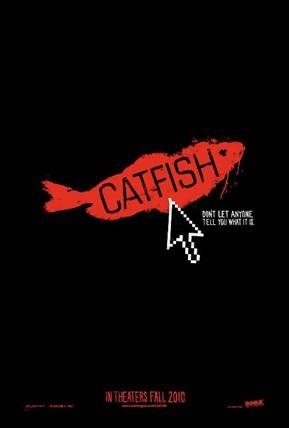
Catfish [2010] • USA

The other Facebook movie. The most surprisingly thoughtful little film of the year. That's all I'm saying.

★★★★★
Directors: Henry Joost, Ariel Schulman
Starring: Megan Faccio, Melody C. Roscher, Ariel Schulman, Yaniv Schulman

IMDb
Wikipedia
Twitchfilm (Ben Umstead)
Twitchfilm (Todd Brown and the reason that's all I'm saying.

Scott Pilgrim vs. the World [2010] • USA

A total blast. This film has about a dozen principle players and they are all great. Michael Cera does his Michael Cera thing but since I've only seen him do it once before I'm not sick of it. This is a good film for him. He gets to rock out on bass guitar and do a lot of ninja fighting. It's all way over the top and executed very well. Whoever edited this film deserves an Oscar for it. It's amazing. This is easily the most fun I've had watching a movie all year. But it's not trash fun. It's witty. I was smiling from start to finish and LOL'd many times. Not a weak or bad character in the bunch.

I understand that this film had a hard time defining its target audience. Who cares? It is sort of a middle school level cartoon with subtlety more mature humor. I don't care that many of the video game references are dated and I don't think the film is "I'm so smugly and ironically hip." I wasn't interested in seeing this film until I noticed it showing up on a few year end top tens. Yes, the film's marketing escaped me too. I was immediately hooked. Try it. If you aren't smiling and laughing in the first ten minutes unplug it and move on. It's at Netflix.

★★★★★
Director: Edgar Wright
Starring: Michael Cera, Mary Elizabeth Winstead, Kieran Culkin, Jason Schwartzman, Chris Evans, Anna Kendrick, Ellen Wong

IMDb
Wikipedia
Twitchfilm (Todd Brown)
Twitchfilm (Jim Tudor)

Black Swan [2010] • USA

Natalie Portman gives a career performance but I don't think it's good enough to make this a great film. The transformation scene near the end is a little too little too late. None of the actual ballet is that exciting or well-executed, and it's only slightly an edgy drama ... inner demons and all that. Nothing is that interesting or played out too intensely. Vincent Cassel is great, of course, but it's not about him. Mila Kunis is refreshing as a "dancer from San Francisco". I enjoyed that she seemed to get what that means.

Good but not great. Natalie Portman is no Mickey Rourke. 


★★★★
Director: Darren Aronofsky
Starring: Natalie Portman, Mila Kunis, Winona Ryder, Vincent Cassel, Janet Montgomery, Barbara Hershey

IMDb
Wikipedia

No Mercy 용서는 없다 (Yongseoneun Eupda) [2010] • South Korea

Pretty standard cop versus killer thriller which is elevated quite a bit by a few good performances and a spectacular ending. It would be a tosser if it weren't for the ending. I didn't see it coming and it is SPECTACULAR (except for the missed opportunity of showing the girl sit there and not do anything when she could have been used to great effect instead of looking like an error).

This film plays out more like a pitch for a movie than a movie. Everything about it and all the characters are formulaic been there, done thats. The script is an eye-roller a lot of time. Bumbling cops and a rouge character on a singular mission who constantly does the impossible because his daughter is in danger. How many times has that been pitched to, and made, by a studio?

However, No Mercy is redeemed by some good performances. Kyung-gu Sol is a very fine actor. The guy who plays the funny pain-in-the-ass cop cliche is also good. Very appealing is Han Hye-Jin. She's one of those spunky young adorable Korean starlets, for sure. Reminded me of Gyu-ri Kim (aka Min-Sun Kim) in Rainbow Eyes.

So if you don't mind run of the mill cop versus killer thrillers, this one is totally worth it for the ending. There is a comparison to be made, to a very famous film with a very famous ending, but it would spoil this film to make that comparison. No Mercy also has some of the more graphic autopsy scenes I've seen in a film. If this is your genre give it a watch. I'm sure you will like it more than I did.

★★★
Director: Kim Hyeong-Jun
Starring: Hye-jin Han, Seung-beom Ryu, Kyung-gu Sol, Ji-ru Sung, Woo-hyung Kim

Asianmediawiki
HanCinema

Buried [2010] • USA, Spain, France

I thought I'd give this one a chance. I like Ryan Reynolds and figured anybody with the kohones to release a film which consists of 95 minutes of a man in a box, a coffin to be exact, might have something interesting to show. But alas, it didn't pan out. Nothing about the film is plausible or interesting.

Reynolds' character has been kidnapped and buried alive by ne'er-do-wells in Iraq. His backstory is revealed through a series of phone calls from within the coffin. There are no flashbacks, nothing to get viewers out of the box. We're in the box with him for the entire run time. His money and papers have been taken from him but he's got a cell phone and a Zippo lighter. He keeps the lighter lit for most of the film so that we can see him—maybe not a good idea when oxygen is in short supply but the thing that kept bugging me is that he hangs onto the lighter most of the time and it should have burnt his fingers. He looks around the coffin for a possible escape hatch but doesn't notice a bag with instructions for making a hostage video until one of his kidnappers calls him and tells him where it's located—"it's by your left foot".

Then a snake shows up. Reynolds lights a fire which causes the snake to make a hasty exit. He's been making phone calls the whole time and eventually gets a call back from the Head of Human Resources at the place which had contracted him to drive a truck in Iraq. The HR guy gives him an exit interview and has him agree that the company shall not be responsible for anything that happens to him, and will not honor his life insurance policy, because he was fired earlier that morning for being too friendly with another employee. The satire of that scene was so broad it bombed.

The film does have a tension filled sad ending which I liked. The director's kohones showed up then, but the rest of the film is ridiculous.

★
Director: Rodrigo Cortés
Starring: Ryan Reynolds

IMDb
Wikipedia

One Day (You yi tian) [2010] aka As I Walked Out One Evening • Taiwan

This is a strange one, in a good way, for the most part. It's a lovely and meditative story of blossoming and innocent young love that jumps back and forth in time and in and out of dreams. It gets a little weird, then a little confusing, and then almost shoots itself in the foot by hinting at some plot to get in the way of the story. I'm not sure that it happened but it seems to have, and it appears to relate to the melodramatic question a young woman asks her mother: "If you could go back to the past and meet dad again, would you still marry him ... but you know that he would have an accident later?"

Nikki Hsin-Ying Hsieh, looking a lot like Zhou Xun from certain angles, plays the young woman with the beautiful name, Singing. She works on a ferry that shuttles recruits between the port of Kaohsiung and the military base of Kinmen Island. One night during the trip all the lights go out on the ferry and Singing appears to be alone. Then an Indian man with an axe, screaming without subtitles, chases her. She's rescued by a young soldier and the loopy dream logic begins. The soldier tells her that they are not in the real world. A horse walks by. Singing's hair is shorter and she's in a study hall in Taipei sitting next to the soldier only now he's a student. They fall in love but keep waking up together, or falling asleep and dreaming together, on the ferry. The future, the past, what's a dream and what's reality blur to the point that it doesn't matter. Until that little plot point rears it's head. There's a little crying and some running, two things that suggest melodrama, but this is a mood piece much more than a drama. The dreamlike quality is emphasized by the fact that almost all the scenes take place on or near the water. The cinematography is often muted and the soundtrack mostly noodling piano.

I think it's a mistake to try and discover meaning in a film like this, as the director or as a viewer, even though it's filled with innumerable possible symbolisms. This is not a commercial love story. It's far too down tempo and poetic. But it is a love story and these kinds of films require a nice couple for us to love, and the two leads provide that here, with extra credit given to the ever watchable Nikki Hsin-Ying Hsieh in her film debut.

The beautiful theme song that plays as the end credits roll is sung by Tarcy Su, a singer and actress I just discovered in the remarkable film Blue Cha Cha.

★★★★
Director: Chi-Jan Hou
Starring: Bryan Shu-Hao Chang, Nikki Hsin-Ying Hsieh, Gwen Yao

IMDb
Asianmediawiki

Secret Reunion (Ui-hyeong-je) [2010] • South Korea

This is a Hollywood style cat and mouse buddy flick with good action sequences, good acting, and a thick plot with international intrigue which ends happily ever after. It stars a couple of South Korea's top box office attractions in Kang-ho Song and Dong-won Kang. Song plays his usual bumbling yet lovable and competent self, and Kang ups his acting ante from stud muffin to scary good hit-man. They have great chemistry together. It's gritty and bloody and, because it seems to follow Song wherever he goes, it's sprinkled with bits of humor throughout.

So what went wrong? Nothing, really, until the deus ex machina at the end. It's probably never been more true than it is with Secret Reunion that a bad ending can ruin a film (for some people). It seems to have bothered critics more than audiences, as Secret Reunion is South Korea's highest grossing film of the year so far. But it also seems to have disappointed one of its actors. As Song put it in an interview "If I were the director, I would have chosen an ending for "Secret Reunion" in which the pain lasts longer". In other words, no living happily ever after. South Korea has a tradition of ending films a little differently than most Hollywood films. People usually die instead of flying off into the sunset. I say it's no big deal and there is a lot f fun to be had with Secret Reunion. Just close your eyes, stop the DVD Player, or walk out a few minutes early f you don't want any cheese in your omelet.

★★★★
Director: Hun Jang
Starring: Kang-ho Song, Dong-won Kang, Kyeong-min Go, Seung-do Han, Su-ho Ha

IMDb
Wikipedia
Asianmediawiki
HanCinema