Showing posts with label art-house. Show all posts

Cafe Noir (Kape neuwareu) [2009] • South Korea

Cafe Noir is a linear quilt of set pieces and cinematic indulgences, vignette style. There are more than a half dozen scenes you could call music videos, gorgeous music videos with great music: Bach chorales, Korean indie funky dub, opera, Chinese avant-garde. The whole film is melancholy and these "music videos" barely raise its temperature. Except maybe the dance number near the end to the middle eastern grooves of Bill Laswell. Dance number?

The film is based on stories by Goethe and Dostoevsky. Most of the dialog is literary if not poetic. Beyond the inspirations and homages to great works of art, Cafe Noir is also steeped in gobs of religiosity ala Kim Ki-duk, and the academic musings on love of Hong Sang-soo, with plenty more nods to contemporary Korean cinema thrown in. There's a scene by the Han river where the uncle of the little girl who was killed in The Host talks about his feelings of loss. So Meta. The forlorn star of the second half is Hong regular Jung Yu-Mi. A scene where she says "fuck you, like you know it all!" will have Hong fans howling.

Viewers of the film familiar with Goethe, Dostoevsky and Classic Film auteurs will have a richer experience of the film than I did. Most of it was lost on me (except for some red balloons).

Cafe Noir is gorgeous.

Cafe Noir is pretentious. It's grandiose and overwhelming. It's punishingly thick and multi-layered. It's over three hours long and languidly paced. Characters in the film don't talk to one another the way normal people do, they deliver lines. Ten year old girls quote Goethe and pontificate about love with more wisdom than I'll ever possess.

Cafe Noir is the most amazing film experience I've had in years.

★★★★★

Director: Jung Sung-il
Starring: Ha-kyun Shin, Yumi Jung, Hye-na Kim, Jung-Hee Moon

IMDb
Asianmediawiki
HanCinema

M/Other [1999] • Japan

Suwa Nobuhiro's follow up to the marvelous 2/Duo. This is another mostly improvised, watching-paint-dry indie flick—although it's more mature in content and character. Makiko Watanabe is superb as Aki, a young woman who's shacked up with an older guy, Tetsuro, who brings his eight year old son to live with them while his wife recuperates from a car accident. At first Aki resents the idea, mainly because she wasn't consulted. She knows she will be tasked with most of the chores related to caring for the child, but soon comes to like her new role and is conflicted when it's coming to an end.

M/Other is a subtle film. Competing, confused emotions and transformation of character are observed, and executed, at a very high level.


★★★★★

Director: Nobuhiro Suwa
Starring: Tomokazu Miura, Makiko Watanabe, Ryudai Takahashi, Hiroo Fuseya

IMDb
Wikipedia
Asianmediawiki

Moonlight Whispers 月光の囁き (Gekkô no sasayaki) [1999] • Japan

One of those "only from Japan" psycho-sexual dramas which explores adult themes of desire, domination, and twisted mind-fuck games and perversion ... acted out by teenagers. No comment on this peculiar film tradition.

Boy with fetishes meets girl with Dom proclivities. At first the girl, played exquisitely by Tsugumi, thinks the boy's over-zealous displays of desire are perverted, but then she realizes his fetishistic personality gives her great power over him so she makes him do pretty much anything degrading she can think of, from licking her feet, nay, her entire leg clean, to locking him in a closet while she has sex with another guy. He goes along with all of it because he is also madly, sadly, and pathetically in love with her. It's a little harder to tell what her motivation is because, well, she's a girl. Depending on the viewer's orientation to things, the film might seem erotic, but no matter which way the wind blows there's no escaping the film's ominous, eerie, and sad emptiness (in an indie good way). This film just broods along beautifully.

This is Akihiko Shiota's directorial debut and probably his strongest film. The focus is clear and concise. The powerful but flawed Harmful Insect would have benefited from such focus. It was the first one of his films I had seen and it pissed me off for days. Then I saw Canary and wasn't sure what to think. There wasn't much new to it and it seemed less well done. Now that I've seen Moonlight Whispers I have to go back and watch those two films again, and I will be seeking out all of his films. Funny how that works.

★★★★★
Director: Akihiko Shiota
Starring: Kenji Mizuhashi, Tsugumi

IMDb
Wikipedia


A Blue Automobile (Aoi kuruma) [2004] • Japan

This film has three things going for it: Aoi Miyazaki, Kumiko Aso, and a great soundtrack. Miyazaki and Aso are two of Japan's most talented and popular young actresses, and I'm always happy when a director shows good taste in music and uses it well—although the hip and evocative soundtrack used here sometimes seems a bit at odds with the slow paced art-house stylings of the film.

A Blue Automobile is a good looking film, very bleak, all stark and concrete, and there are a number of creative and interesting directorial choices made by Okuhara but the overall vision of the film left me wanting. That isn't always a problem but this film plays like it wants to be a film with a vision to talk about, an exploration of a heavy theme: pain, as a game changer. Indie actor cool dude Arata does a fine job as a young man who doesn't think much of living because of an accident as a child that has left him scarred around the eyes. He plays an introverted danger-punk guy, and we all know that fetching, young, good-hearted women are attracted to the type, so that's what plays out.

I was intrigued, fascinated even, by the characters as discreet units but wasn't able to engage or be moved by the exposition of the characters' motivations toward one another. It's basically another story about a guy who gets two women. And this time they are sisters, which adds to the oh-so-intense nature of the angst. That there's a big theme of immense suffering lurking in the background all the time doesn't make it much more than that, except it does make it "alternative".

The film has many bright moments and solid acting. It's not mainstream fare by a long shot, but fans of any of the three leads should enjoy watching them do their stuff. The film wants to be more than it is but it really doesn't matter. I enjoyed the experience of the film. It's one of those where you give more points to journey than goal.

★★★
Director: Hiroshi Okuhara
Starring: Arata, Aoi Miyazaki, Kumiko Aso, Tomorowo Taguchi, Kenji Mizuhashi

IMDb
Asianmediawiki
Japan Times

I Am an S+M Writer 不貞の季節 (Futei no kisetsu) [2000] • Japan

Ryuichi Hiroki released this film and Tokyo Trash Baby on the same weekend!

Kurosaki (Ren Osugi) is an erotic novelist who uses his editor and a hired model to act out scenarios in his living room he will use for inspiration in his writing. His wife Shizuko (Yôko Hoshi) calls him a pervert but we soon learn that what bothers her is that she feels her husband has intellectualized his carnal desires and she feels physically neglected. Shizuko tries to make him jealous, or simply goes after what she desires with someone else. At first she brings home an Caucasian English teacher but soon zeros in on her husband's editor after witnessing his accomplished S&M rope tying technique. Kurosaki's first response is anger, then forgiveness, then he decides to use the affair as inspiration for his current work in progress. He demands that his editor continue the affair and recount all the sordid details to him. He slaps his editor upside the head, then forgives him and offers him a drink each time before they get to work.

I don't think this would be funny if it were an English language film. Part of its charm is feeling like a foreigner watching a Japanese film. Much of the humor is surely lost in translation but some of the translations take on a humor of their own. Often it feels like the words are too blunt and some subtlety of language is being missed, while other times it seems words are forced together into strange combinations to try and convey different shades of something not literally translatable. "Go anal". It's all played very sincerely, if somewhat surreal. 

Speaking of surreal, one thing that puzzled me throughout this film was the house where most of the action takes place. The layout seems inscrutable, a labyrinth of hallways and doors. A character will walk down a hall, turn down another, and then open a sliding door to apparently go into a room. Then the camera is in the supposedly entered room but the door has hinges and no relation to a hallway. Kurosaki will serve his assistant a beer from one direction and then deliver a second one from a different location. There's one scene that appears to have no plot value where the maid exits a door, removes her shoes and plunges off the porch a couple feet to the ground, as if she expected a step of some kind to be present. I assume this scene is meant to convey that even the characters are a bit befuddled by the structure and layout of the house. Maybe I just missed something but this kind of scene does fit in with the overall strangeness of the film.

While this comes off as a small and amusing film, I think it was a big film for Ryuichi Hiroki, somewhat autobiographical, incorporating way more Japanese history and culture than I am privy to, and most importantly served as a great transition for him from a director of pinku films to more mainstream fare, albeit a little arthousey.

★★★★
Director: Ryuichi Hiroki
Starring: Ren Osugi, Yôko Hoshi, Jun Murakami, Eri Yamazaki, Kiriko Shimizu

IMDb
Asianmediawiki
Japan Times
Midnight Eye

Asako in Ruby Shoes 순애보 (Sunaebo) [2000] • South Korea, Japan

This one seems a bit of an art-house diversion for director Je-yong Lee. A mildly bizarre, slow moving film that's half Japanese and half Korean. It aims at just the right level and ends up as a nice compromise between indie indulgence and commercial fare.

On the Korean side, Lee Jung-Jae stars as U-in, a bored, anti-social civil servant who passes time surfing porn on the Internet and silently stalking a young punkish girl with fiery red hair. While playing around on the Internet U-in clicks on a link that asks him to describe his ideal woman. He describes the punky girl.

On the Japanese side Misato Tachibana stars as Aya, a young woman who has decided to commit suicide with a twist: she wants to confuse the date of her impending death by holding her breath and suffocating as she crosses the International Date Line. She also desperately wants a pair of Ruby colored shoes. One thing leads to another and Aya is contracted by Internet porn purveyors to play the punkish girl, as described by their client U-in, on one of their webcam sites. Thus the persona of Asako is born.

The two disparate lives meet and wind the film up in a somewhat unbelievable fairy-tale style ending but it's been a strange ride getting there so no giant complaints. It's interesting to see a film that is half in Japanese and half in Korean. Much of the film deals with the theme of belonging and it allows for stretching that theme to something larger than just one culture.

The performances are all pretty solid. Fashionista superstar Kim Min-hee plays the punky girl. It's a small role, as she serves only as the inspiration for Asako, but it's catchy. Lee Jung-jae is spot on as the nerdball stalker. This is a better role for him than the studly type he played in Je-yong Lee's debut film An Affair. He's much better at nerdy innocence with a sense of creepy just below the surface than as a macho guy who is supposed to drive girls wild. Misato Tachibana brings just the right amount of cuteness and individual longing to Aya/Asako. She doesn't seem to have pursued her acting career ambitiously after this film but did well here.

The film has a slow pace and treats some of the edgier elements with a gentle touch. It never becomes darkly uncomfortable and that's it's charm. It's got quirky characters and a subtle, light sense of humor. Not completely art-house fair but certainly not mainstream. Recommended for those who like films slightly off the beaten path.

★★★★
Director: Je-yong Lee
Starring: Misato Tachibana, Jung-Jae Lee, Urara Awata, Min-hie Kim, Ju-bong Gi
IMDb
Asianmediawiki

Glasses めがね (Megane) [2007] • Japan

Serenity now. This lovely gem can be dismissed as a new-age tourist brochure for Okinawa (although the locale remains unnamed in the film) if one is feeling rambunctious, or it can be consumed like one of the many bowls of magical shaved ice presented in the film, a spoonful at a time without surprises, savoring the moments that celebrate the simple in life.

The story that will unfold is obvious from the beginning. A harried young city dweller, Taeko, takes a much needed vacation to a remote island inn, meets a few laid back and strange locals which she at first tries to keep her distance from but eventually succumbs to the rhythm of the place and its people. Happiness is attained.

For a film like this to work it needs to look nice, have engaging characters, and not take itself too seriously. It's filmed on Yoron Island, Okinawa, Japan, so director Naoko Ogigami has the aesthetics of location covered. There are plenty of shots of crystal clear waters washing up on pristine beaches that look nice and help set the slow rolling pace of the film. Ogigami has written a witty and sparse script, which drifts along alternating between surreal and a Zen koan, and assembled a wonderful and talented cast to deliver it. Ken Mitsuishi, who's been in 136 films, plays the inn-keeper Yuji with such calm assurance you might think you're watching his biography. Ogigami also brings along two actresses who made an impression in her previous film, Kamome Shokudo (Seagull Diner). Masako Motai plays a mysterious visiting matriarch of the island, Sakura, who makes magical kaki-gori, a dessert made of shaved ice and syrup, and leads the locals in weird morning calisthenic exercises on the beach. Satomi Kobayashi plays Taeko, the vacationing visitor to the island. She seems well suited to Ogigami's style, having played a similar fish-out-of-water character in Kamome Shokudo, a Japanese woman who opens a restaurant serving rice balls in Helsinki. Her performance here shows a slow and subtle transformation that reflects the pace of life on the island. The cast is rounded out with celebrated young actors Mikako Ichikawa and Ryo Kase.

If you enjoy slow, amusing, meditative films with quirky characters this is a winner. If you're looking for slapstick, this is a loser. It's whimsical and slightly bizarre but thoroughly understated. Moments that might seem a little new age tree-huggerish aren't annoying because the tone is not preachy or precious. It's very light-hearted and doesn't take itself seriously.

★★★★★ 

Director: Naoko Ogigami
Starring: Satomi Kobayashi, Mikako Ichikawa, Ryo Kase, Ken Mitsuishi, Masako Motai
IMDb
Asianmediawiki
Japan Times
Time Out (an opposing view)


2/Duo (2/dyuo) 2 Duo [1997] • Japan

This is a rare gem. The feature film debut of director Nobuhiro Suwa. It's a no-budget, mostly improvised slice of emotionally repressed life which observes a young couple for a short period of time as they struggle to communicate. I wouldn't say things are going badly for them at this particular point in their lives, they seem very much in love, but the relationship is uncomfortable.

Kei (Nishijima) is a struggling actor, freeloading off Yu (Eri Yu) which makes him impulsive and insecure resulting in unpredictable behavior, fits of anger, and a proposal of marriage. Yu works in a boutique as a shop assistant and seems to be playing the archetype of the abused and unappreciated Japanese woman who tackles her fate with a Zen determinism. Her habit of laughing during the most tense and awkward moments makes her appear a little unstable but also very real, almost surreal.

Even without a handful of scenes where the characters (the actors?) are interviewed about their feelings by an off-screen voice, the film has a fly-on-the-wall documentary feel. 2 Duo is a quietly disturbing character study and the blurring of fiction with documentary might serve to enhance the impact but I'm not interested in critiquing the film from that angle. This is a film which lets us observe the surface interactions of a couple characters that clearly have immense depth. With its crisp vision, assured direction, and most of all its fine acting we really don't need any meta-narrative in order to be fully engaged. I'll leave it to film school students to comment on the ramifications of the documentary style interviews if such a critical look is needed.

This is a small, quiet film with characters that seem overflowing with histories right when we meet them. It's a little sad and painful but it's executed so well there's an uplifting quality to it. This is mostly due to the performance of Eri Yu, who went on to make a few more films but then seems to have disappeared from the industry. Nishijima's performance isn't quite the caliber of Yu's, or perhaps his character isn't as interesting. Being a jerk isn't as complex as being someone who bes with that jerk with their head held high, slightly wobbling.

★★★★★
Director: Nobuhiro Suwa
Starring: Eri Yu, Hidetoshi Nishijima, Makiko Watanabe

IMDb

Tokyo Trash Baby 東京ゴミ女 (Tokyo gomi onna) [2000] • Japan

Mami Nakamura's performance makes this one a big winner. She's engaging, endearing, amusing, and sympathetic from start to finish. That's what it takes for a small film like this to succeed, a film which says: "Here's an offbeat character, do you like her? Does she draw you into her life, entertain you, and invite you to wonder what will happen to her?" It takes a clever script and a good performance. Tokyo Trash Baby delivers on both accounts.

Miyuki (Nakamura) is a girl in love with her upstairs neighbor, a musician. Instead of trying to meet him she is content with stealing his garbage and foraging through it to find things that will give her insight into his personality. She collects many things, like empty cereal boxes, cigarette butts, love letters, discarded musical scores, and creates a shrine to her love in her apartment. She discards a used condom. The story falls a little flat after she does eventually meet him face to face, but Miyuki is still fun to spend time with. As are the few peripheral characters in the film.

Tomorowo Taguchi plays the manager at the cafe where Miyuki works and is typical Taguchi odd but doesn't have much impact on the story. Two other characters do, though: Kô Shibasaki plays co-worker, Kyoko, whose screen time is devoted almost exclusively to telling Miyuki stories of her sexual conquests, dreams, and dilemmas ... and bumming smokes. Masahiro Toda plays a customer trying desperately to get Miyuki to go out with him but he's too boring to make an impact on her. His attempts at realizing love are face to face but his loneliness prevents him from catching a clue. Both characters serve as juxtaposition to Miyuki and highlight my favorite theme of the film: loneliness. Kyoko has a very active social life but seems unfulfilled and lost. Miyuki (contrary to most observations on the film) doesn't seem lonely. She seems content and happy with her life. That's what makes her interesting. Director Hiroki gives her the respect she deserves.

Tokyo Trash Baby is part of the Love Cinema series of six straight-to-video releases which also includes Takashi Miike's Visitor Q. It's a low-budget affair shot on Digital Video. It's uses all natural lighting and sometimes the glare from an open window distracts but never gets in the way. It's testament to the strength of the story and performance that technical limitations do not derail the project at all.

★★★★★
Director: Ryuichi Hiroki
Starring: Mami Nakamura, Kazuma Suzuki, Kô Shibasaki, Sayuri Oyamada, Tomorowo Taguchi

IMDb
Asianmediawiki
MidnightEye

Viewfinder 경 (Kyung) [2010] • South Korea

Hooray for the new wave of women directors coming up in South Korea. This film, the feature film debut of director Kim Jeong isn't quite the caliber of last year's A Blind River, directed by newcomer Ahn Seon-kyeon, but it's got some fine moments and the overall vision is pretty solid. It shares the same general theme of searching, of someone searching for a lost family member, and also shares the notion that the search is really for the self and that the person searched for isn't really lost as much as not being seen.

I watched both films not knowing anything about them, nor anything about who directed them, and felt pretty strongly that both of them were directed by a woman. These are not chick-flicks, though. Both films are propelled by an almost surreal emotional logic which makes them seem a little difficult at first. Not that men don't make films like this and not that all women do. There's just something peculiarly right-brained and double x-chromosoned at work. This kind of approach doesn't replace traditional linear narrative technique. It accompanies it, fuels it, and might require the viewer to relax their expectations and look at the film from a different perspective.

The two films are also quite different. Ahn Seon-kyeon is a musician and scriptwriter and A Blind River is a more artful film. Kim Jeong teaches at a University and Viewfinder is a bit academic. She has also directed several short films and a documentary trilogy on women's history. Not to slight Kim's artistic credentials, though. Viewfinder is a low budget film but it looks very good and is full of creative photography, capturing both the heavily industrialised and the naturally scenic character of South Korea. And it's got a fantastic soundtrack. I wish I could read Korean so I'd know who performs the songs that sound like Chet Baker meets Lhasa de Sela.

I'm going to cheat here and quote the synopsis from the web site for the International Women's Film Festival in Seoul where Viewfinder premiered:
Viewfinder showcases moments in the lives of several people who meet by accident at the Namgang Rest Stop off a highway in southern South Korea. Kyung is in search of her younger runaway sister. Chang is a computer whiz who had recently lost his job, Kim Vac is a reporter-photographer who frequents the place, and Ona is an orphan media artist who works there, dreaming of New Asia Highway. These four form a loose network of loss and negotiate that loss in the digital age.
That's all fine and good. The film does spend a good amount of time observing people using computers. What's remarkable about it, besides the quantity, or rather, what's remarkable about it in spite of the quantity, is that it all seems very natural. Yes, we live in a digital age but this film isn't about negotiating anything that's peculiar to it. The tools are different than they were a decade or two ago but I think it's a disservice to the film to make it sound like it might be nerdy, or SMS messaging trendy. It's more weird and poetic and the focus is on people and their emotions.

If only it weren't for this program note which follows the synopsis, I wouldn't be concerned:
[...] Following her previous documentary "Koryu", director Kim Jeong tries to catch the motions of people staying and leaving, or the space of constant motion. The camera often follows the people from behind rather than watching them from the front and looks around the scenes, passing outside from the driver’s seat, which gives the audience the feeling of being inside the film. Viewfinder is an independent film with a low production budget. It tells about the communication, loneliness, and the emptiness of people living in the digital environment. The traces of people’s views and the results of their motions are delivered through digital texts. The internal emotions are expressed not on the human faces but on the virtual space generated by a computer window. The camera seems to be attracted to the new scenes created by digital technology and concurrently dreams of the space it cannot reach. Viewfinder is a cinematic exploration about the primal scene in the digital age considerately brought by director Kim Jeong.

I like the bit about catching people in the space of constant motion but the rest of it sends my bullshit detector through the roof. I don't care if its a direct quote from the director's commentary track. "The camera ... dreams of the space it cannot reach". Help! I need a class in contemporary film deconstruction.

Viewfinder is a film about people, not the plague of the digital age. It's about people living their lives, dreaming their dreams, and doing their jobs ... and one of the characters is trying to figure out why everything got a little fucked-up. She gives the film its emotional center. Films have been doing this for a long time. All four characters are portrayed well and are engaging. Choi Hee-Jin, as the photographer is a blast. She's sweet and kind and thoughtful but often makes you wonder if she understands other people's personal space. Photographers are like that. Lee Ho-Young is also good as the guy who finds people without ever leaving his computer and he kind of explains the movie through his philosophical poetry. Newcomer and unknown Moon Ha-in, as the popular Internet blogger who works the night shift at the rest stop where most of the action takes place, is the most intriguing, and probably the most together. She also looks a lot like Lee Yeon-Hee. At first I felt like Yang Eun-Yong, who plays Kyung and is more or less the lead, gave a rather flat performance but her character is supposed to be a little flat. There is a moment near the end which fleshes things out.

This is a film about characters, not tools. It's slow-paced and low-key with a few quirky bits thrown in for spice. There's some surreal dialog, some animation, a breaking of the fourth wall, and a supernatural scene where the subject of a photograph doesn't appear in the picture. It's slightly bizarre but also very down home and it's got a great soundtrack. It's not going to play well at the mall but if you like art films with real emotion it's worth seeking out. 

★★★★
Director: Jeong Kim
Starring: Eun-yong Yang, Hui-jin Choe, Ho-young Lee, Moon Ha-in

IMDb
Asianmediawiki
HanCinema
12 International Film Festival in Seoul  

One Day (You yi tian) [2010] aka As I Walked Out One Evening • Taiwan

This is a strange one, in a good way, for the most part. It's a lovely and meditative story of blossoming and innocent young love that jumps back and forth in time and in and out of dreams. It gets a little weird, then a little confusing, and then almost shoots itself in the foot by hinting at some plot to get in the way of the story. I'm not sure that it happened but it seems to have, and it appears to relate to the melodramatic question a young woman asks her mother: "If you could go back to the past and meet dad again, would you still marry him ... but you know that he would have an accident later?"

Nikki Hsin-Ying Hsieh, looking a lot like Zhou Xun from certain angles, plays the young woman with the beautiful name, Singing. She works on a ferry that shuttles recruits between the port of Kaohsiung and the military base of Kinmen Island. One night during the trip all the lights go out on the ferry and Singing appears to be alone. Then an Indian man with an axe, screaming without subtitles, chases her. She's rescued by a young soldier and the loopy dream logic begins. The soldier tells her that they are not in the real world. A horse walks by. Singing's hair is shorter and she's in a study hall in Taipei sitting next to the soldier only now he's a student. They fall in love but keep waking up together, or falling asleep and dreaming together, on the ferry. The future, the past, what's a dream and what's reality blur to the point that it doesn't matter. Until that little plot point rears it's head. There's a little crying and some running, two things that suggest melodrama, but this is a mood piece much more than a drama. The dreamlike quality is emphasized by the fact that almost all the scenes take place on or near the water. The cinematography is often muted and the soundtrack mostly noodling piano.

I think it's a mistake to try and discover meaning in a film like this, as the director or as a viewer, even though it's filled with innumerable possible symbolisms. This is not a commercial love story. It's far too down tempo and poetic. But it is a love story and these kinds of films require a nice couple for us to love, and the two leads provide that here, with extra credit given to the ever watchable Nikki Hsin-Ying Hsieh in her film debut.

The beautiful theme song that plays as the end credits roll is sung by Tarcy Su, a singer and actress I just discovered in the remarkable film Blue Cha Cha.

★★★★
Director: Chi-Jan Hou
Starring: Bryan Shu-Hao Chang, Nikki Hsin-Ying Hsieh, Gwen Yao

IMDb
Asianmediawiki

Fine, Totally Fine 全然大丈夫 (完全没问题) (Zenzen daijobu) [2008] • Japan

This is a subtle, almost surreal comedy that wanders along at a slow pace, punctuated with bits of low-brow humor to keep it alive. It's also an odd little romance and a root-for-the-losers character drama, but there's never any high drama, as the film never gets out of lazy Sunday afternoon mode. The comedy and romance are spices in the mix of everyday people turning thirty, going nowhere fast, who end up going from not so good to not so bad after all. When the humor is subtle or sad it's great, but not so good when it resorts to the juvenile, like when a booger flies across the room and lands in someone's eye. Comedy is tough and everyone has a style that suits them. I could have done without the more broad-based physical bits but they do serve a purpose as little alarms for those who don't appreciate two hours of deadpan, no matter how funny it is. The director demonstrates a good amount of skill in using editing for comic timing, and he was wise to cast YosiYosi Arakawa as the guy to do the heavy lifting when it comes to the “Life’s more fun when you’re an idiot” bits.

I recommend this film to those who like slow comedies, but also to those who like whatever you call these uplifting films about everyday people who don't become rock stars or win the Olympics but just get along and find happiness in everyday life. I love the way the film ends and anti-resolves a love triangle we weren't sure was going to turn out to be much of a plot point. I wanted to reach through my screen and hug the crap out of Yoshino Kimura. Her performance really surprised me. What a pleasure to see her do comedy, albeit of the low-key and clumsy kind.

And even though her part is very small, any film with Noriko Eguchi gets points just for having her.

★★★
Director: Yosuke Fujita
Starring: YosiYosi Arakawa, Yoshino Kimura, Yoshinori Okada, Noriko Eguchi, Shima Ise

IMDb
Asianmediawiki

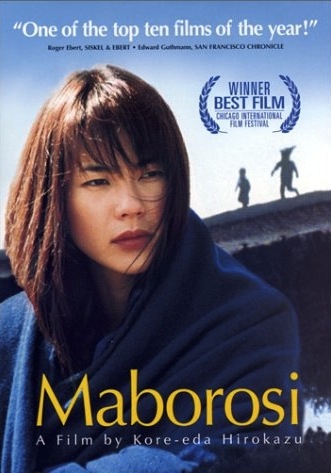
Maborosi 幻の光 (Maboroshi no hikari) Illusion [1995] • Japan

Continuing my exploration of Hirokazu Koreeda. This is another sad and gentle, lyrical film dealing with the themes of loss, death, and the soul. You have to be in the mood to let a film just float by, or wash over you in lilting waves to appreciate Maborosi. A couple of art house film techniques Koreeda employs might frustrate some viewers. One is the use of extremely long shots, in terms of time to a degree but mostly in terms of distance. His camera doesn't always foreground the focus of a scene but instead pulls back and observes it from afar. Sometimes very far. The second thing is that, with only a few exceptions, you never get a really good look at the faces of the actors, an aspect all the more remarkable given Koreeda's casting a fashion model in her film debut as the main protagonist. There is no vanity in this film. It's all bare naked emotion and gorgeous photography.

The film centers on Yumiko, played by Makiko Esumi the fashion model, whose husband apparently commits suicide by walking into an oncoming train three months after their first child is born. Koreeda establishes quickly, and beautifully, at the beginning of the film a very genuine and loving relationship between the couple so the viewer shares in Yumiko's confusion and pain in not knowing why he would kill himself. After a period of mourning Yumiko agrees to an arranged marriage and moves from Osaka with her son to a small fishing village where her new husband, a widower with a young daughter, has lived all his life. There are a few scenes which suggest Yumiko might have found happiness again but it doesn't last. The haunting inexplicability of her first husband's death is too strong for her to escape. The scene where Yumiko finally and completely breaks downs is framed and captured perfectly, but it's shot from about three hundred yards away.

The whole thing is more like a painting than a narrative film. The camera hardly ever moves. People don't say much and plot isn't really part of the equation. One thing I usually insist on when watching these slow-burn character studies with minimal dialog is access to the character's interior. What are they thinking and feeling? The most expressive entrance to someone's interior is their eyes, but as I've mentioned Koreeda shoots the film in such away we hardly know what the characters look like, let alone are we able to look into their eyes. Something else happens. We may not get a sense of what Yumiko is thinking or feeling but we have great sympathy for her. Her despair and inconsolable suffering are clearly shown.

Maborosi is the work of an artist, not someone with an interest in selling theater tickets. Koreeda's passion is exploring light and color and composition, and in exploring the themes of loss, death, and the nature of the soul. Yes, that's a polite way of saying a lot of people will find the film boring. So be warned. For those who like this kind of thing, and you know who you are, this is one of the good ones. It is so full of magnificently composed photography it will take your breath away.


Maboroshi is a Japanese term for illusion or mirage, and is often used in the tales of fishermen to describe a light that tempts them, without explanation, further out to sea. Maboroshi is the explanation given to Yumiko as to why her husband may have walked into the path of an oncoming train.

★★★★★
Director: Hirokazu Koreeda
Starring: Makiko Esumi, Takashi Naitô, Tadanobu Asano, Gohki Kashiyama, Naomi Watanabe

IMDb
Wikipedia
Asianmediawiki
Roger Ebert

Blue Cha Cha 深海 (Shen hai) [2005] • Taiwan

It's a great pleasure when watching a film you're enjoying and knew nothing about to recognize that beyond being a good film you are also experiencing the work of a skilled director. The upside to this is that there's a good chance you'll have at least a few more good films in your future. Such is the case with Blue Cha Cha.

The film begins with Ah Yu, played by Taiwanese singer Tarcy Su, being released from prison. We aren't told why she was there or how long she was in for. She makes her way to the home of a weathered motherly woman named An-an, played by veteran actress Yi-Ching Lu, whom she had come to know in prison. An-an takes her in and gives her job at the hostess bar she operates. After an arranged date doesn't pan out the way Ah Yu expected it to, she quits the bar and takes a job at a computer factory. Her relationship with a young supervisor she meets there, along with her ongoing and anchoring relationship with An-an, is the meat of this film.

Blue Cha Cha requires patience, and yes, that's code for it being an art house type film that moves slowly and doesn't offer a lot of detail as to why things are happening. Beyond a somewhat ambiguous statement near the end of the film revealing why Ah Yu was in prison we never learn anything about her past, and throughout the film it is clear that she has no idea nor concrete desires for her future. She just drifts along, medicated, mentally unstable yet always trying to be nice, hoping each day will offer some measure of fulfillment. Blue Cha Cha isn't a low-budget indie film, though. It has excellent production values and looks very good. The direction is fluid and creative and the cinematography is great.

As I always say, these kinds of films need good characters and good performances in order to succeed. Blue Cha Cha delivers them. Yi-Ching Lu, who has been in a number of films by Ming-liang Tsai, is always reliable. She's tough and unafraid to do almost anything as an actress. But the real highlight here is Tarcy Su. She is able to make us care for a character we never learn much about. We're not always clear about what is going on inside her head but we're always sure she is experiencing something. It's very surprising to me how well she is able to articulate a confused yet committed mind without offering any insight as to the details of the matter. There's a scene where she is laying in bed with a man, staring at him face to face as he drifts in and out of sleep. There is a frightening authenticity to her gaze which offers no explanation as to its genesis.

The ending is peculiar, and depending on how you interpret a couple of things ambiguously discussed and stated it could actually result in a big blunder. I don't care. I'm not a fan of films which attempt an explanation for the mental instability of their characters. I appreciate that Cheng leaves it as a lingering issue until the very end of the film, and I doubly appreciate that he leaves it ambiguous enough to ignore if it is something we find questionable.

★★★★★
Director: Wen-Tang Cheng
Starring: Tarcy Su, Yi-Ching Lu, Leon Dai, Wei Lee, Cheung-Ying Lin

IMDb
Asia Pacific Arts 

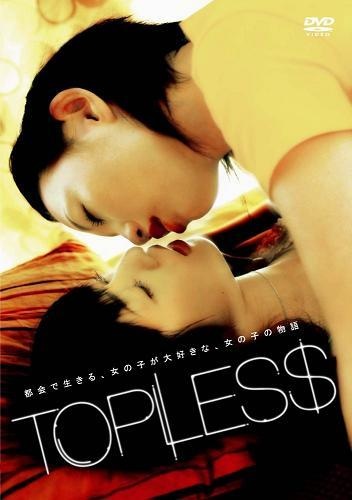
Topless トップ (Toppuresu) [2008] • Japan

There's zero nudity in this very sweet film about being lesbian in contemporary Tokyo. Someone is going to argue that the title metaphorically refers to being emotionally topless, i.e., baring your soul, because the film takes the risky approach, like millions of films do, of being about being human. Even though the film focuses on the loves and lives of its central lesbian characters it really speaks a universal language that heterosexual viewers can relate to as well—like having to deny your identity for the sake of marrying a man for security. Uh-huh. No. This film is about being lesbian.

Topless is refreshing and all that. Its themes of love and fear and politics and sadness are universal. Some of its plot points are a little diversitiste though, like the young girl who comes to Tokyo with an anti-lesbian chip on her shoulder to look for her mother who abandoned her several years ago to be with a lesbian lover, meets the film's protagonist who helps her, comes to recognize that lesbians can be good people too. OK. Characters learn from other characters all the time in movies.

The film might appear a little fluffy when you stand back from it, but the journey through it is filled with a number of poignant moments. One is the film's only sex scene, a non-explicit one between the film's central lesbian character and her male roommate. She's lost her true love to a man, is full of turmoil and wants to see what sex with a man is like. The scene is done very well and handled delicately.

My take on the title and the poster depicting two young women about to engage in a passionate kiss is this: the opening moments of the film are a little warm. The two women, as depicted on the poster, are engaged in some very passionate kissing and roaming of hands. And then pop! The top, the attitude many viewers stereotypically enter with, and desire from, a film about lesbians—two chicks going at it will be hot—comes off. The scene makes an abrupt change in tone and direction. All of a sudden the film is about people with personalities and it never looks back. Yes, it keeps saying "my desire to love and be loved as a lesbian is just like yours (as a straight person) except it's a little complicated by all this societal buildup of crud." That's the point.

My biggest takeaway from the film is Mina Shimizu. She's one of those actresses like Noriko Eguchi, except she's very upbeat and not moody and darkish like Eguchi, who owns the screen and everyone else in it every time she appears. I predict big things ahead for her.

★★★★
Director: Eiji Uchida
Starring: Mina Shimizu, Ryûnosuke Kawai, Aya Ohyama, Erika Okuda, Aya Oomasa

IMDb
Asianmediawiki
isugoi

The Isle 섬 (Seom) [2000] • South Korea

Pain is the most sincere emotion. Kim Ki-duk likes pain. He likes showing us pain. We don't question the motivation when its genesis is pain. When people speak about pain there is always room for a misunderstanding made possible by the distracting literalness of the communication. The characters in many Kim Ki-duk films never speak at all, navigating and exposing their pain with silent clarity.

This is one of the films that got me interested in East Asian cinema. I had previously seen Kim's Bad Guy and thought it was interesting, if not a great film, but it sure made me want to see more from the guy who made it.

I've gone on to see most of Kim's films and this one still stands as my favorite. I think Jung Suh's performance as the caretaker of a remote fishing village who doesn't say a word in the entire film is the strongest performance in all of Kim's films, and I think her character is one of the strongest characters that Kim has given us. Of course it's a symbiotic relationship where a good actor can make a character come alive and where a well-written character allows a good actor a chance to shine. Suh (sometimes romanized as Seo) plays the caretaker Hee-jin with a frightening intensity, and is all the more enigmatic because she never speaks. I also think this is Kim's best looking film. His background as a painter is obvious in the color composition and framing. The misty lake with the little colored cottages floating about are beautifully photographed.

As for the pain quotient, it's a toss up between this and Address Unknown. I'm not sure why Kim abuses animals in his films. I don't like it but it's not enough for me to ignore his work. And it's not really where the pain comes from in this film. The infamous fishhook scenes are obviously a source of physical pain but there's also the emotional pain we witness between Hee-jin and the man who killed his girlfriend and has come to her fishing village to hide, or die if that doesn't work out. There's murder, rape, and multiple suicide attempts and I'm not sure that Kim's isn't presenting all of this with a little bit of tongue in his cheek. Kim is someone who works in the extreme, that's for sure.

The ending of the film, where the man swims into the weeds which in turn become the pubic hair of Hee-jin lying naked in the boat, suggesting a metaphorical attempt to return to the womb, is a little silly. Many see this as tacked on for some crazy reason and would have preferred the film end with the two of them floating downstream together. I don't think the extra, symbolic, ending is necessary but I also don't think it ruins the film. Great films succeed in spite of their weaknesses. The ending may be weak but this is a great film.

★★★★★
Director: Ki-duk Kim
Starring: Jung Suh, Yoosuk Kim, Sung-hee Park, Jae-hyeon Jo, Hang-Seon Jang

IMDb
Wikipedia
Asianmediawiki
HanCinema

Woman of Water (Mizu no onna) [2002] • Japan

A very nice looking indie art house film that seems like it might roll over and play dead at any minute but never does. It also never really gets up and goes anywhere either, which is fine because films that are nice to sit back and look at might as well move along at a leisurely pace. Woman of Water is a bunch of pretentious, metaphorical poetry about man and woman and fire and water fueling a story about a woman who runs a bath house and whose intense emotional states are always accompanied by rain and the arsonist whom she hires to stoke the fires that keep her bath water warm.

The film stars singer UA (pronounced "oowa") in her first movie role and gains a lot of art house credibility by pairing her with Japanese heartthrob Asano Tadanobu. They both get naked a bunch of times so it's a gawker's paradise as far as these things go. Even though UA is playing water her dark sensuality is more earthy than watery and her sex appeal is more ethereal than liquid. Born Kaori Shima, her stage name UA is Swahili for flower or kill. She's not idol-of-the-month beautiful by a long shot, more mysterious and a little worn looking with a well-grounded and tough charisma. She does fine in her acting debut even though her main responsibility lies in being photographed well more than exercising any major thespian chops.

Don't go into this one hoping for any strength of narrative. It's meandering and opaque. Both of the characters have baggage in their past meant to give the film some emotional appeal but it might as well be a silent movie with the freewheeling and oblique way the plot develops, mixing dreams, fantasies, deja vu, and visual metaphors in equal measure. This one is for fans of art house esoterica only.

★★★★
Director: Hidenori Sugimori
Starring: UA, Tadanobu Asano, Hikaru, Yutaka Enatsu, Ryûichi Ôura

IMDb
Asianmediawiki


This Charming Girl 여자, 정혜 (Yeoja, Jeong-hye) [2004] • South Korea

I sat for two hours loving this woman, and feeling sorry for her, hoping for her. That's what is supposed to happen when you watch a well-executed character study.

If you were to look up "boring art house film" in some film dictionary you might find the plot synopsis for This Charming Girl listed as the definition: The film follows Jung-hye’s quiet life and reveals the landscape of the character’s inner feelings.

Jung-hye has forged her own life out of simplicity and solitude as the result of some trauma earlier in her life. The film doesn't focus on what that trauma is or how Jung-hye may eventually resolve it. Instead, it focuses on the mundane life she has made for herself as a result. We watch her feed her cat, cook herself meals, go to a job at an uneventful workplace, go shopping for shoes. This is not an action movie. It's an extremely slow burn that leads to one very intense scene which involves a knife. It's an intense scene not because anything crazy happens but because we can see all of the repressed emotions inside this woman come boiling to the surface. And we can see this happening because Kim Ji-Su's performance is nothing short of phenomenal.

No use going into more detail about the events of the film. It's better to see them for yourself. If you like well-written, well-acted, meticulously directed character studies This Charming Girl is one of the best ones out there. Even though it is art house to the max, there isn't a pretentious moment in the film.

★★★★★
Director: Yoon-ki Lee
Starring: Jeong-min Hwang, Ji-su Kim, Mi-seong Kim

IMDb
Wikipedia
Asianmediawiki
HanCinema
Korean Film.org
Love HK Film
Japan Times 

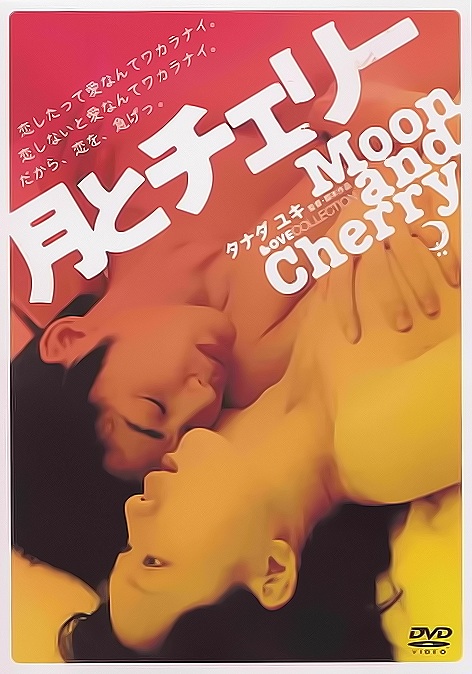
Moon and Cherry 月とチェリー (Tsuki to Cherry) aka Electric Button [2004] • Japan

Noriko Eguchi is one of my favorite actresses. She's had small parts in nearly fifty films in eight years. What's remarkable is that most of them have been reasonably high profile and critically well received, suggesting she has good intuition when it comes to selecting roles, and many of them are at the hands of Japan's best directors, suggesting they have good intuition when it comes to casting. She's not a box office draw, being much more a character actor than any idol-of-the-moment type, but she helps elevate every film she's in. Whenever she's onscreen she always appears smarter, stronger, deeper, and a little more enigmatic than everyone around her.

It's almost as if director Yuki Tanada wrote her first feature length film, Moon and Cherry, with Eguchi in mind. The film centers on the machinations of Mayama, played by Eguchi, as a member of a university erotic literature writing club. Mayama, its only female member, is the most talented and respected of the group because she's already been published, albeit under a male pseudonym. She's had sex with all but one of the other members of the group and uses the experiences as fodder for her writings. The film kicks into gear when a younger student, Tadokoro, joins the group. He immediately impresses the male members of the group with his knowledge of female anatomy, but just as he is swimming in their praise and accolades, Mayama walks in and says "Yeah, but you're a virgin." Experienced women can sense these things and Tadokoro is busted. Thus begins the intriguing gender role reversal story that is Moon and Cherry.

Mayama knows Tadokoro will make for good material so she takes him home to create some copy. The deflowering scene is controlled by Eguchi with aplomb, and in a moment of directorial panache, while Mayama is performing fellatio, we see Tadokoro biting his lip to the point of drawing blood. I don't need to spell out the brilliance of that metaphor. As soon as Mayama pops Tadokoro's cherry she jumps out of bed and starts writing. Tadokoro is befuddled but doesn't complain too much. As the relationship grows, Mayama sees Tadokoro's inexperience as an opportunity to try new things like sending an S&M dominatrix to his apartment and then demanding Tadokoro tell her all about it. She invites herself, followed by a pre-paid prostitute, to his place and then hides in his closet to watch the two of them go at it.

The only problem with completing this attempt at full on role reversal is the fact that Mayama is one of those women that men lose their minds over. There's no escaping that. Mayama has sex with Tadokoro in bed, on the floor, in the park, against a vending machine, but in between these events she disappears from his life. Tadokoro is torn but wants to make better use of his new found experience so he starts a relationship with a sweet and attractive co-worker, Akane, who serves as juxtaposition to Mayama. This sort of turns the film back on itself but I don't consider it a shortcoming at all.

Moon and Cherry is a very well-acted, creative and intelligent film that takes a different look at love, sex, and relationships. It's a low budget indie film shot on digital video as part of a Love Connections series of 2004 and it's a welcome opportunity to see the marvelous Noriko Eguchi star in a film. It's a smashing feature debut from writer/director Yuki Tanada who's gone on to script the female and visual extravaganza, Sakuran; write and direct Yû Aoi in One Million Yen and the Nigamushi Woman; and most recently write and direct the small masterpiece, Ain't No Tomorrows which I'll be reviewing soon.

A final shout out to newcomer Tasuku Nagaoka who plays Tadokoro with an awkwardly genuine sincerity. He's young and frail but never lets you think he won't make it, impressive in holding his own in scenes with the powerful Eguchi.

This could be a five star film but I don't think it wants to be. It wants to remain small and intimate. And independent. And even though it's one of the better films in recent memory, considered one of The Best of the Decade by a couple of the folks at Midnight Eye, I'm going to respect its wishes and give it four stars (with a stealth fifth star in the labels).

★★★★
Director: Yuki Tanada
Starring: Noriko Eguchi, Akira Emoto, Tasuku Nagaoka
Midnight Eye

A Piece of Our Life カケラ (Kakera) [2010] • Japan

In the "Making of" documentary on the Love Exposure DVD director Sono Sion says to Hikari Mitsushima, “You’re an actress. You’re supposed to move us. Move us, you idiot!” She must have taken it to heart. She was great in Love Exposure and she's the main reason I like this film. She doesn't have a lot of dialog in A Piece of Our Life but she is constantly communicating, through body language and projecting her internals. That's something good actors do.

A Piece of Our Life is a story about two very different young women who end up spending time together. It's not a lesbian love story. There are no make-out scenes or naked bodies entwined in soft focus. No politics. The two protagonists just happen to be women. That's a healthy notion and could have made for a much better movie if one of the women didn't actually discourse about it. "It's not about if you're a man or a woman. You should have someone who you think feels good" might sound like words of wisdom but to me they sound like words from a director who is afraid her audience won't get it unless she spells it out.

There are many subtle and wonderful details in A Piece of Our Life, such as when Riko (Eriko Nakamura), the aggressive and confident one, asks Haru (Hikari Mitsushima) if she liked their "kiss for friendship" and Haru says "No" and the scene cuts away. Haru's response isn't one of objection or disgust. It's simple and honest, even if born a bit from surprise. There are also a few details which are just plain wrong, such as why does the quiet woman, who's probably never imagined dating another woman before, have to start out being in a relationship with an asshole, a guy with terrible table manners who uses her only for sex while he openly has another girlfriend on the side? That seems like a cheap and lazy juxtaposition against Riko's declaration that she likes women because "they're soft and cuddly, and they smell nice". It snuggles up to close to the tired idea that women only choose other women after they've become thoroughly disgusted by disgusting men.

I also think Riko's character was a lot smarter than the way she acts every time the couple interacts with a third party: when Haru's (ex)boyfriend comes over; when a man approaches Haru in the nightclub; when Riko shows up at Haru's university party. Riko acts childish and jealous. This seems at odds with the maturity Riko shows when dealing with her other girlfriend: "I can't fulfill the hollow you have in your heart".

There are a lot of things to like about this film. It's got a simple, honest, and wonderful vision which it explores with some effectiveness, and the two lead performances are outstanding. But it could have been a really, really great film instead of a really good one if it would have practiced what it preaches and left out more of the stuff we've seen, heard, and grown tired of before.

Momoko Ando is a young director to keep an eye on. A Piece of Our Life is one of the best and brightest films I've seen recently. My criticisms are born of a frustration that the director came just short of making an other-worldly masterpiece by adding in elements she just wanted to make a point of rather than letting the world of the film dictate the boundaries. 

Just shy of five:
★★★★
Director: Momoko Andô
Starring: Hikari Mitsushima, Eriko Nakamura, Ken Mitsuishi, Tasuku Nagaoka, Rino Katase

IMDb
Asianmediawiki