Showing posts with label ★★★★★. Show all posts

Cafe Noir (Kape neuwareu) [2009] • South Korea

Cafe Noir is a linear quilt of set pieces and cinematic indulgences, vignette style. There are more than a half dozen scenes you could call music videos, gorgeous music videos with great music: Bach chorales, Korean indie funky dub, opera, Chinese avant-garde. The whole film is melancholy and these "music videos" barely raise its temperature. Except maybe the dance number near the end to the middle eastern grooves of Bill Laswell. Dance number?

The film is based on stories by Goethe and Dostoevsky. Most of the dialog is literary if not poetic. Beyond the inspirations and homages to great works of art, Cafe Noir is also steeped in gobs of religiosity ala Kim Ki-duk, and the academic musings on love of Hong Sang-soo, with plenty more nods to contemporary Korean cinema thrown in. There's a scene by the Han river where the uncle of the little girl who was killed in The Host talks about his feelings of loss. So Meta. The forlorn star of the second half is Hong regular Jung Yu-Mi. A scene where she says "fuck you, like you know it all!" will have Hong fans howling.

Viewers of the film familiar with Goethe, Dostoevsky and Classic Film auteurs will have a richer experience of the film than I did. Most of it was lost on me (except for some red balloons).

Cafe Noir is gorgeous.

Cafe Noir is pretentious. It's grandiose and overwhelming. It's punishingly thick and multi-layered. It's over three hours long and languidly paced. Characters in the film don't talk to one another the way normal people do, they deliver lines. Ten year old girls quote Goethe and pontificate about love with more wisdom than I'll ever possess.

Cafe Noir is the most amazing film experience I've had in years.

★★★★★

Director: Jung Sung-il
Starring: Ha-kyun Shin, Yumi Jung, Hye-na Kim, Jung-Hee Moon

IMDb
Asianmediawiki
HanCinema

M/Other [1999] • Japan

Suwa Nobuhiro's follow up to the marvelous 2/Duo. This is another mostly improvised, watching-paint-dry indie flick—although it's more mature in content and character. Makiko Watanabe is superb as Aki, a young woman who's shacked up with an older guy, Tetsuro, who brings his eight year old son to live with them while his wife recuperates from a car accident. At first Aki resents the idea, mainly because she wasn't consulted. She knows she will be tasked with most of the chores related to caring for the child, but soon comes to like her new role and is conflicted when it's coming to an end.

M/Other is a subtle film. Competing, confused emotions and transformation of character are observed, and executed, at a very high level.


★★★★★

Director: Nobuhiro Suwa
Starring: Tomokazu Miura, Makiko Watanabe, Ryudai Takahashi, Hiroo Fuseya

IMDb
Wikipedia
Asianmediawiki

Red Cliff 赤壁 (Chi bi) [2008+2009] • China

A five hour holiday marathon. Period pieces, costume dramas, and films about fighting (physically or with weapons other than the heart) are a few of my least favorite film genres so I don't know how it happened but I loved every minute of this monster. If I had watched the condensed version I wouldn't have liked it. There are two 30 minute fight scenes, and since the cut version is aimed at Western audiences I doubt they would have suffered any loss, which would have then made them be half the movie and I would have been bored silly.

I love the Art of War, men of honor, tea ceremony languid pace of it which allows for fleshing out the characters and slowly developing the gravity of the situation. Sure, it's a little over-the-top at times—it's John Woo—but it's really easy to get into the film's depiction of historically important events and forgive a few personal excesses. The film is remarkably understated for the most part. All the performances are good. All the actors bring you into their world and make you care for them and their concerns. I even rooted for these guys when they went ONE against ONE THOUSAND ... something so silly I've never understood the prevalence nor appeal of it in film.

This film ignited an interest in Chinese historical epics I never thought I would develop. It prompted me to watch The Emperor and the Assassin, and that one is awesome. I've got a couple more in my queue. I think the key is picking the ones that are made for a Chinese rather than a Western audience. The long version of Red Cliff seems to be one of those films. It's slower and more poetic, which is what I like. If it's what you like and you've been keeping this one at bay for fear it's just another big, dumb Chinese historical videogame, give it a shot—and be sure to give it the long shot.

★★★★★
Director: John Woo
Starring: Tony Leung Chiu Wai, Takeshi Kaneshiro, Chen Chang, Wei Zhao, Fengyi Zhang, Shido Nakamura, Jun Hu, Yong You

IMDb
Wikipedia
Asianmediawiki

Moonlight Whispers 月光の囁き (Gekkô no sasayaki) [1999] • Japan

One of those "only from Japan" psycho-sexual dramas which explores adult themes of desire, domination, and twisted mind-fuck games and perversion ... acted out by teenagers. No comment on this peculiar film tradition.

Boy with fetishes meets girl with Dom proclivities. At first the girl, played exquisitely by Tsugumi, thinks the boy's over-zealous displays of desire are perverted, but then she realizes his fetishistic personality gives her great power over him so she makes him do pretty much anything degrading she can think of, from licking her feet, nay, her entire leg clean, to locking him in a closet while she has sex with another guy. He goes along with all of it because he is also madly, sadly, and pathetically in love with her. It's a little harder to tell what her motivation is because, well, she's a girl. Depending on the viewer's orientation to things, the film might seem erotic, but no matter which way the wind blows there's no escaping the film's ominous, eerie, and sad emptiness (in an indie good way). This film just broods along beautifully.

This is Akihiko Shiota's directorial debut and probably his strongest film. The focus is clear and concise. The powerful but flawed Harmful Insect would have benefited from such focus. It was the first one of his films I had seen and it pissed me off for days. Then I saw Canary and wasn't sure what to think. There wasn't much new to it and it seemed less well done. Now that I've seen Moonlight Whispers I have to go back and watch those two films again, and I will be seeking out all of his films. Funny how that works.

★★★★★
Director: Akihiko Shiota
Starring: Kenji Mizuhashi, Tsugumi

IMDb
Wikipedia


Winter's Bone [2010] • USA

"Here's a doobie for the road". Haven't heard that one in years. I wasn't sure if I was going to be able to sit comfortably through a couple hours of hillbilly meth heads mumbling through their problems, but Jennifer Lawrence's performance doesn't take long to latch onto. Then Uncle Teardrop shows up. John Hawkes, as Teardrop, nails the role of resident scary guy, and he almost steals the show. A young man of slight physical stature, he is nonetheless able to project frightening unpredictability and intimidation. His character is very well written with a broad development arc, from violent to thoughtful to playing the banjo. The film is worth seeing for Hawkes's performance alone, but it's got a lot more to offer.

Winter's Bone, on the surface, is a backwoods family drama about drug culture, but it's also a good mystery thriller. There are some obvious and unnatural "dialog as character development" moments, and a few scenes inserted to show a little down home familial love and bonding which are a slight cause for pause, but the overall pace is fairly swift and they are easily forgiven, especially when the it rolls out one of the saddest, most thought-provoking endings to a film I've seen in a long time ... well, at least since Confessions. And it's John Hawkes who delivers the death blow.

The ending is not ambiguous. The intended scenario seems fairly clear, but it is open to a number of possibilities. It allows the viewer to sidestep the tragedy if they want to. It's brilliantly written, not saying as much as it says, and it sort of retroactively creates another layer of emotional depth to the film as a whole. I might have been on the fence had the ending come with less of an impact. This is a film that could be a big downer, considering its subject matter, but as written and directed by Debra Granik it clings to the hopeful side of bleak, punctuated and allowed for in the end. Such is the nature of hope.

★★★★
Director: Debra Granik
Starring: Jennifer Lawrence, John Hawkes, Isaiah Stone, Ashlee Thompson, Valerie Richards

IMDb
Wikipedia

Hear Me 听说 (Ting Shuo) [2009] • Taiwan

Hear Me 听说
This light-hearted rom-com charmed its way into my top ten of the year. It's not a cinematic masterpiece by any stretch of the imagination. It's just a rom-com, delightful and enjoyable for the characters, if not the story. I like fluff as much as the next person, if it's done well.

Boy meets girl. Girl is preoccupied caring for her handicapped sister. Boy gets girl. Handicapped sister wins the Olympics. It's feel-good from head to toe, and it's beautiful that all the love is delivered in sign language.

Xiao Peng is a swimmer in training for the Deaflympics. Her sister, Yang Yang, does everything she can for her and wrestles between being over-protective and neglectful. Tian Kuo sees Yang Yang one day while delivering food to Xiao Peng's swim team facility. He sees Xiao Peng communicating with Yang Yang in sign language and makes an assumption. Take it from there.

Tian Kuo's parents must be a professional comedy team in real life because they have comic timing down pat and an assured sense of what comic relief is.

Hear Me was Taiwan's highest-grossing local movie of 2009. A good time was had by all in this house. I have no further defense.

★★★★★
Director: Fenfen Cheng
Starring: Ivy Chen, Eddie Peng, Michelle Chen, Lo Bei An, Lin Mei Xiu

IMDb
Asianmediawiki

Sweet Little Lies スイートリトルライズ (Suîto ritoru raizu) [2010] • Japan

There will be a lot of words written about how this film "makes you think"; how it makes you think about marriages which on the surface appear to be happy ones, and then how it (the film) proceeds to reveal the Sweet Little Lies that go on underneath in order to keep up that appearance. This will not be my approach. The idea has been Twin Peaksed to death. Nothing wrong with that. I'm just one who finds execution more engaging than idea.

Ruriko (Miki Nakatani) and Satoshi (Nao Omori) have been married for a few years and have been sexless for about the same. Satoshi, even though he's a little too grown up to be doing so, likes to sleep in and play video games. He doesn't appear to have any real love for his wife but also doesn't object to her much. It's Ruriko who demonstrates, though she may not necessarily have, all the love in the coupling. She's as dutiful as they come. She cooks breakfast, washes windows, and smiles sincerely. Both of them seem to float through life in a daze of WTF, sort of like the way folks taking a high daily dosage of Valium would. They are both stalked and then drawn into sexual affairs. Ruriko dives into hers the only way she knows how: with detached positivity. Satoshi remains lost in his cloud, but doesn't complain.

For a while I thought this film might fail. Miki Nakatani doesn't strike me as an actress with much range. She's good at contemplative WTF gazes off into space but not much more. Or so I thought. This role is perfect for her and she shines, and director Hitoshi Yazaki does a great job of capturing her in her strength. There are times when Nakatani brings the film into a surreal, Stepford Wives atmosphere with her robot-like gazing, and then she'll bust it wide open with a smile that makes you want to go crawling into her arms whimpering "mommy mommy", even though she exudes zero maternal aspects of personality.

Juichi Kobayashi, as Haruo, the man Ririko has an affair with, is a curiosity. He's a dancer, not an actor, so he's used to being adored but doesn't have any acting chops. Doesn't matter. He's a stalker so he's supposed to be creepy, if only mildly, and his role is to serve as an excuse for Nakatani to get emotional. There's great tension in sitting through the improbability of Ruriko actually falling in love with this guy, not just wanting to have sex with him, because, as unbelievable as it might seem, it's the only way Ruriko knows.

Nao Omori is a pleasure to behold as Satoshi. He's hard to figure out because he's so good at playing a man who doesn't have a clue. He's also lucky to have Chizuru Ikewaki cast as the young woman who innocently, but persistently pursues him. She elevates every film she's in and brings a controlled, mature naivete to her role that works wonderfully alongside Omori's clueless Satoshi. Both of these actors are great casting choices and in many ways, at least as a couple, they are more interesting than Haruo and Ruriko.

Sakura Ando rounds out the cast, in a small role, as Haruo's girlfriend. Yeah, Haruo is a cheater, too.

Hitoshi Yazaki directed one of my all-time favorite films, Strawberry Shortcakes, so I had pretty high hopes for this one. There were moments in the first act where I wasn't sure if things were going to work out but this is a much different film. It's slower paced and takes a while to bring you into its dreamlike world where appearances appear superficial. The brilliance of it is that when confronted with this obvious superficiality we assume it's masking a cauldron of repressed emotions, but there are no revealed emotions in this film. Nakatani's Ruriko appears to show some emotion, and she has a wonderfully teary-eyed "I Love You" scene, but it's not real. She's just executing the rituals she believes are associated with the set of circumstances. I was premature in thinking I would have to punt my suspension of disbelief at the idea of Ruriko falling in love with her stalker. It's not supposed to be believable. It's just another illusion Ruriko will play a role in.

If only Yazaki hadn't included the scene where Satoshi's sister stops Ruriko, as she attempts an abrupt exit from their afternoon tea to go meet Haruo, and says "Ruriko, you're glowing", my theories would make sense. As it stands, I am completely full of shit. Who cares?

Sweet Little Lies is shot in gorgeously austere and misty shades of gray. There are innumerable scenes in the film full of nuanced and subtle discomfort that will make you shiver. The script is smart, the performances are dazzling, and the film will make you think. Feel free to think about whatever you want.

★★★★★
Director: Hitoshi Yazaki
Starring: Miki Nakatani, Nao Omori, Chizuru Ikewaki, Sakura Andô, Juichi Kobayashi

IMDb
Asianmediawiki
Japan Times

Confessions 告白 (Kokuhaku) [2010] • Japan

When I made my top ten list for 2010 I wrote I was confident that if I had seen this it would have made the list. It's a little late, but now I've seen it and added it to the list.

As par usual, I'm not going to go through a plot synopsis. Click on one of the links at the end of this entry if you want that. 

Confessions is not perfect but it's pretty close. It's dark and gorgeous. It's unsettling. It's got Takako Matsu and Yoshino Kimura; Radiohead and Boris on the soundtrack. It gets crazy and goes by quickly at times (hard to catch all the subtitles), even though a good portion of the film is in slow motion. It's a testament to the skill of the director that everything makes an impression, even fluttering by. A few times, for a moment, it seems like it might lose steam and then whoosh! There it goes again. This is hands-on film making. An audio-visual package right up there with Myung-se Lee's M. It gets physical. And that's what I like about it. Nakashima gets how to manipulate sight, sound, and time moving through time that creates both a sense of being on a rollar coaster and being suspended in time. Like being in a dream or a car wreck.

It's creepy that most of the players in the film are 14 years old, talking about killing people and their mommy problems. The film gets most of its fuel from mommy problems. Shocking that it seems so believable that these kids understand what they are talking about. Tetsuya Nakashima makes these kids smart. It's very refreshing.

The first and last acts are both tours de force. I've seen three different English translations of the last line in the film. Don't google it until after you've seen it. What an ending! Some folks have written that Nakashima throws it all away with the last line but I think it depends on how you take it. I found it eerily ambiguous and evil.

Most commenters on the film will point out the film's "social commentary", i.e., that kids under fourteen years of age can't be punished by the law for anything. I'm not big on social commentary commentating but watching the film I couldn't help but think that any thirteen year old contemplating murder sort of gets a green lit idea. And the bit about the teacher giving the unpunishable kids HIV tainted milk, as part of her revenge, is chilling but it's more that she fills the kids with a fear of their own mortality than attempting murder of her own. You'll see what I mean when you watch the film. It's just one of the many questionable aspects of the script's believability that ....

If you over think this film it can fall apart. If you're the type that does that kind of thing you won't like it as much as I did. But unless you are also sensitive to slow motion or post rock emo soundtracks it's hard not to be overwhelmed by this masterfully crafted film.

★★★★★
Director: Tetsuya Nakashima
Starring: Takako Matsu, Masaki Okada, Yoshino Kimura, Masakazu Ato, Atsushi Ozawa

IMDb
Asianmediawiki
Japan Times
Beyond Hollywood

The Emperor and the Assassin 荆轲刺秦王 (Jing ke ci qin wang) [1998] • China

EPIC. Long, slow, a little melodramatically meandering but never boring. This is a great film to watch before Hero to get a more standard historical telling of the story of China's first Emperor. It's not stuffy and stilted the way many more formal Chinese historical films can be. Most of the characters are a little wacky. I put off watching this for a long time because I'm not a fan of what I thought it was going to be: wuxia with little plot and a lot of fighting. It's not that at all. It's got palace intrigue, battle plans, and real history behind it.

There is a well-written and very informative review of the film over at Illuminated Lantern. It discusses many of the scenes and compares them to historical document. It can be read without spoiling the film because this isn't a film built on surprises. We know the story for the most part but it helps, especially western viewers who aren't familiar with the source material, to have some grasp of the impact of what is portrayed in the film in terms of shaping Chinese history.

Gong Li is fabulous, but not really the star of the film. Xuejian Li, as the Emperor, balances unhinged with forthright and hits every note in between. Fengyi Zhang goes from badass assassin to homeless bum who's given up assassinating to badass assassin again and then to someone we're not sure of, all convincing. Zhiwen Wang almost steals the show as the eunuch lover of the queen who has a plan of his own. He seems almost a little too contemporary but Kaige has assembled a film that allows for him. This is more than a standard period piece costume drama. It's history done well and it's very entertaining. Most appealing to me is my perception that this film was made for a Chinese audience, not a western, festival-circuit one.

A recent Red Cliff marathon got me in the mood for EPIC so I indulged and was quite happy—not to mention it features Zhou Xun, unquestionably my favorite Chinese actress, in a small but significant role. It's hard not to see this as a parallel to state sanctioned historiography of Mao, but no matter. Chinese unity is paramount, there will be blood.

★★★★★
Director: Kaige Chen
Starring: Xuejian Li, Fengyi Zhang, Gong Li, Zhou Sun, Zhiwen Wang, Chen Kaige

IMDb
Wikipedia
Asianmediawiki
Official site
Variety
Illuminated Lantern

Glasses めがね (Megane) [2007] • Japan

Serenity now. This lovely gem can be dismissed as a new-age tourist brochure for Okinawa (although the locale remains unnamed in the film) if one is feeling rambunctious, or it can be consumed like one of the many bowls of magical shaved ice presented in the film, a spoonful at a time without surprises, savoring the moments that celebrate the simple in life.

The story that will unfold is obvious from the beginning. A harried young city dweller, Taeko, takes a much needed vacation to a remote island inn, meets a few laid back and strange locals which she at first tries to keep her distance from but eventually succumbs to the rhythm of the place and its people. Happiness is attained.

For a film like this to work it needs to look nice, have engaging characters, and not take itself too seriously. It's filmed on Yoron Island, Okinawa, Japan, so director Naoko Ogigami has the aesthetics of location covered. There are plenty of shots of crystal clear waters washing up on pristine beaches that look nice and help set the slow rolling pace of the film. Ogigami has written a witty and sparse script, which drifts along alternating between surreal and a Zen koan, and assembled a wonderful and talented cast to deliver it. Ken Mitsuishi, who's been in 136 films, plays the inn-keeper Yuji with such calm assurance you might think you're watching his biography. Ogigami also brings along two actresses who made an impression in her previous film, Kamome Shokudo (Seagull Diner). Masako Motai plays a mysterious visiting matriarch of the island, Sakura, who makes magical kaki-gori, a dessert made of shaved ice and syrup, and leads the locals in weird morning calisthenic exercises on the beach. Satomi Kobayashi plays Taeko, the vacationing visitor to the island. She seems well suited to Ogigami's style, having played a similar fish-out-of-water character in Kamome Shokudo, a Japanese woman who opens a restaurant serving rice balls in Helsinki. Her performance here shows a slow and subtle transformation that reflects the pace of life on the island. The cast is rounded out with celebrated young actors Mikako Ichikawa and Ryo Kase.

If you enjoy slow, amusing, meditative films with quirky characters this is a winner. If you're looking for slapstick, this is a loser. It's whimsical and slightly bizarre but thoroughly understated. Moments that might seem a little new age tree-huggerish aren't annoying because the tone is not preachy or precious. It's very light-hearted and doesn't take itself seriously.

★★★★★ 

Director: Naoko Ogigami
Starring: Satomi Kobayashi, Mikako Ichikawa, Ryo Kase, Ken Mitsuishi, Masako Motai
IMDb
Asianmediawiki
Japan Times
Time Out (an opposing view)


Top Ten Most Enjoyable Films of 2010

A few of these had a 2009 festival (or local) release but were 2010 films for me. Mother, Air Doll, Be Sure to Share, and Night and Fog were on my Best of 2009 list.
  1. The Social Network • USA
  2. Confessions • Japan**
  3. Aftershock • China
  4. Scott Pilgrim vs the World • USA
  5. Greenberg • USA
  6. Catfish • USA
  7. Season of Good Rain • China, South Korea
  8. Hear Me • Taiwan
  9. Closer to Heaven • South Korea
  10. One Day • Taiwan
Two films I'm confident would be on this list if I had seen them are Sono Shion's Cold Fish and Nakashima Tetsuya's Confessions. Most surprising is that four USA films ranked so high, Taiwan has two spots, and there is nothing from Japan, yet.

**[UPDATE] Saw Confessions, and there it is at #2. Wow. What a film.

There are, of course, many films I haven't seen. A handful that I have seen, and that have shown up on many top tens around the Internet, that deserve mention, although not always honorable, are: True Grit, Black Swan, Inception, Shutter Island, Jack Goes Boating, Animal Kingdom, The Ghost Writer, The Fighter, The Town, The American, Please Give, Poetry, Never Let Me Go, I Saw the Devil, Dogtooth, and Enter the Void.

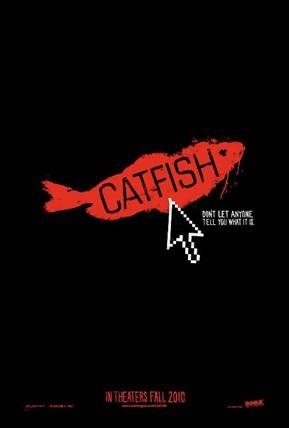
Catfish [2010] • USA

The other Facebook movie. The most surprisingly thoughtful little film of the year. That's all I'm saying.

★★★★★
Directors: Henry Joost, Ariel Schulman
Starring: Megan Faccio, Melody C. Roscher, Ariel Schulman, Yaniv Schulman

IMDb
Wikipedia
Twitchfilm (Ben Umstead)
Twitchfilm (Todd Brown and the reason that's all I'm saying.

Scott Pilgrim vs. the World [2010] • USA

A total blast. This film has about a dozen principle players and they are all great. Michael Cera does his Michael Cera thing but since I've only seen him do it once before I'm not sick of it. This is a good film for him. He gets to rock out on bass guitar and do a lot of ninja fighting. It's all way over the top and executed very well. Whoever edited this film deserves an Oscar for it. It's amazing. This is easily the most fun I've had watching a movie all year. But it's not trash fun. It's witty. I was smiling from start to finish and LOL'd many times. Not a weak or bad character in the bunch.

I understand that this film had a hard time defining its target audience. Who cares? It is sort of a middle school level cartoon with subtlety more mature humor. I don't care that many of the video game references are dated and I don't think the film is "I'm so smugly and ironically hip." I wasn't interested in seeing this film until I noticed it showing up on a few year end top tens. Yes, the film's marketing escaped me too. I was immediately hooked. Try it. If you aren't smiling and laughing in the first ten minutes unplug it and move on. It's at Netflix.

★★★★★
Director: Edgar Wright
Starring: Michael Cera, Mary Elizabeth Winstead, Kieran Culkin, Jason Schwartzman, Chris Evans, Anna Kendrick, Ellen Wong

IMDb
Wikipedia
Twitchfilm (Todd Brown)
Twitchfilm (Jim Tudor)

2/Duo (2/dyuo) 2 Duo [1997] • Japan

This is a rare gem. The feature film debut of director Nobuhiro Suwa. It's a no-budget, mostly improvised slice of emotionally repressed life which observes a young couple for a short period of time as they struggle to communicate. I wouldn't say things are going badly for them at this particular point in their lives, they seem very much in love, but the relationship is uncomfortable.

Kei (Nishijima) is a struggling actor, freeloading off Yu (Eri Yu) which makes him impulsive and insecure resulting in unpredictable behavior, fits of anger, and a proposal of marriage. Yu works in a boutique as a shop assistant and seems to be playing the archetype of the abused and unappreciated Japanese woman who tackles her fate with a Zen determinism. Her habit of laughing during the most tense and awkward moments makes her appear a little unstable but also very real, almost surreal.

Even without a handful of scenes where the characters (the actors?) are interviewed about their feelings by an off-screen voice, the film has a fly-on-the-wall documentary feel. 2 Duo is a quietly disturbing character study and the blurring of fiction with documentary might serve to enhance the impact but I'm not interested in critiquing the film from that angle. This is a film which lets us observe the surface interactions of a couple characters that clearly have immense depth. With its crisp vision, assured direction, and most of all its fine acting we really don't need any meta-narrative in order to be fully engaged. I'll leave it to film school students to comment on the ramifications of the documentary style interviews if such a critical look is needed.

This is a small, quiet film with characters that seem overflowing with histories right when we meet them. It's a little sad and painful but it's executed so well there's an uplifting quality to it. This is mostly due to the performance of Eri Yu, who went on to make a few more films but then seems to have disappeared from the industry. Nishijima's performance isn't quite the caliber of Yu's, or perhaps his character isn't as interesting. Being a jerk isn't as complex as being someone who bes with that jerk with their head held high, slightly wobbling.

★★★★★
Director: Nobuhiro Suwa
Starring: Eri Yu, Hidetoshi Nishijima, Makiko Watanabe

IMDb

Tokyo Trash Baby 東京ゴミ女 (Tokyo gomi onna) [2000] • Japan

Mami Nakamura's performance makes this one a big winner. She's engaging, endearing, amusing, and sympathetic from start to finish. That's what it takes for a small film like this to succeed, a film which says: "Here's an offbeat character, do you like her? Does she draw you into her life, entertain you, and invite you to wonder what will happen to her?" It takes a clever script and a good performance. Tokyo Trash Baby delivers on both accounts.

Miyuki (Nakamura) is a girl in love with her upstairs neighbor, a musician. Instead of trying to meet him she is content with stealing his garbage and foraging through it to find things that will give her insight into his personality. She collects many things, like empty cereal boxes, cigarette butts, love letters, discarded musical scores, and creates a shrine to her love in her apartment. She discards a used condom. The story falls a little flat after she does eventually meet him face to face, but Miyuki is still fun to spend time with. As are the few peripheral characters in the film.

Tomorowo Taguchi plays the manager at the cafe where Miyuki works and is typical Taguchi odd but doesn't have much impact on the story. Two other characters do, though: Kô Shibasaki plays co-worker, Kyoko, whose screen time is devoted almost exclusively to telling Miyuki stories of her sexual conquests, dreams, and dilemmas ... and bumming smokes. Masahiro Toda plays a customer trying desperately to get Miyuki to go out with him but he's too boring to make an impact on her. His attempts at realizing love are face to face but his loneliness prevents him from catching a clue. Both characters serve as juxtaposition to Miyuki and highlight my favorite theme of the film: loneliness. Kyoko has a very active social life but seems unfulfilled and lost. Miyuki (contrary to most observations on the film) doesn't seem lonely. She seems content and happy with her life. That's what makes her interesting. Director Hiroki gives her the respect she deserves.

Tokyo Trash Baby is part of the Love Cinema series of six straight-to-video releases which also includes Takashi Miike's Visitor Q. It's a low-budget affair shot on Digital Video. It's uses all natural lighting and sometimes the glare from an open window distracts but never gets in the way. It's testament to the strength of the story and performance that technical limitations do not derail the project at all.

★★★★★
Director: Ryuichi Hiroki
Starring: Mami Nakamura, Kazuma Suzuki, Kô Shibasaki, Sayuri Oyamada, Tomorowo Taguchi

IMDb
Asianmediawiki
MidnightEye

Story of Qiu Ju 秋菊打官司 (Qiu Ju da guan si) Qiu Ju Goes to Court [1992] • China, Hong Kong

If you have any interest in learning about or experiencing a foreign country (assuming China is a foreign country to you), you'll get a lot from this film. Roger Ebert, although not a great resource when it comes to East Asian cinema, wrote "we absorb more information about the lives of ordinary people in everyday China than in any other film I've seen". Ebert hasn't seen a lot of Chinese films but his observation is still to the point. The Story of Qiu Ju seems like it is utterly realistic and revealing and that's what is magical about it. Much of the film, most of it in fact, that involves people surrounding the main characters is captured with a hidden camera and is quite candid and authentic. The scenes focused on the main characters are also shot (and performed) in such a way as to suggest they aren't staged in any way. But don't be fooled. This is the genius trickery of director Zhang Yimou's sweet homage to the days of yore.

A very pregnant Qiu Ju and her young husband are chili farmers and want to build a storage shed for their over-productive crop. They go to the village chief to ask permission and are denied on the grounds that the land is for farming, and that if everyone built a building there would be nothing to eat. Qiu Ju's husband points out that the chief isn't a farmer, doesn't understand farming, and is only raising hens. The chief hears the final remark as a humiliating insult about the fact he has only four daughters—and no sons to carry on his family name—so he kicks Qiu Ju's husband in the balls.

Qiu Ju's story is a journey for justice as she perceives it. She is worried at first that her husband's injury may leave them condemned to the one child policy for good, but her husband soon recovers and the film then chronicles her efforts to get the village chief to apologise. That is the only justice she wants. The chief offers to let Qiu Ju's husband kick him in the balls but he won't apologise. Qiu Ju takes her case up the hierarchy to the district administrators, the county, the city, and the party, with the result always being the same: The village chief will pay for medical bills and loss of work and Qiu Ju and the chief are instructed to engage in some self-criticism in order to regain harmony. And by harmony they mean Qiu Ju should drop the case. Everyone, all the way to the top, is sympathetic to her but they won't ask the chief to apologise because he is the chief and he would lose face and his ability to keep chiefing would be compromised. It's a subtle but huge point in Chinese culture.

This film is so good on so many levels it's crazy. One of the head-scratching wonders of the film is it's portrait of harmonious village life while this minor conflict is going on. The first reaction most people will have to this film is "Are people really that nice and polite to one another"? It's almost a documentary capturing rural Chinese life in the 1990's in all its humble and honest simplicity. It's also an insightful observation on the changing bureaucracy in China, both vertically and horizontally over time. It's a parable which ponders whether the law, the wisdom of elders, or common courtesy offers the best solution to disputes. Zhang Yimou is fascinated, and maybe discouraged (maybe not), by the changing Chinese culture and weaves a grand metaphorical tale for viewers to consider from many angles.

Gong Li's performance is amazing. One of the most beautiful women in the world, she plays this role very down to earth and understated, not to mention pregnant, dressed in peasant clothing, and with a scarf wrapped around her neck and much of her face most of the time. It's not a glamorous role. She is one of only a few professional actors in the film and does a remarkable job melting in among all the real people.

The Story of Qiu Ju is a slow paced, somewhat repetitive film but it's all the better for it. Viewers are treated to a heart-warmimg world of relationships which are themselves slow-paced and repetitive. It would be a shame to rush through it.

★★★★★
Director: Zhang Yimou
Starring: Li Gong, Peiqi Liu, Liuchun Yang, Kesheng Lei, Zhijun Ge

IMDb
Wikipedia

A Good Rain Knows 호우시절 (Ho woo shi jul) aka Season of Good Rain [2009] • South Korea, China

It would be a spoiler if I were to state one of the main reasons I love this movie. I can say, however, that the film is very much about a Chinese experience, and the fact that it is directed by a Korean is what makes it interesting. There are other good things about the movie so I'll work with them and save the spoiler.

A Good Rain Knows is nice to look at. It's photographed in crisp and bright colors and makes great use of it's locale, Chengdu, the capital city of Sichuan Province. It's got dancing in a downtown square, bamboo groves, even a scene with a panda bear. Gao Yuanyuan as Mei, a tourist guide in a Chengdu park, has never looked more radiant. Jung Woo-sung is a South Korean heartthrob but his acting ability is curious. He always seems nervous. He plays an architect, Dongha, who travels to Chengdu on assignment and runs into Mei, an old and dear friend. There is no plot to speak of, just the unfolding of their past and present relationship that gives the film its purpose.

Dongha, a Korean, and Mei, a Chinese, communicate almost exclusively in English. Since their relationship is presented as fragile and tentative, and since Jung is a nervous actor anyway, having them communicate in broken but understandable English is a stroke of genius from director Hur. If you're bothered or unmoved by the stilted verbiage the film won't work.

In typical Hur fashion, and this film sees him in perfect stride, not much happens. We're presented with a couple characters testing the water to see if, when, and how love will factor into their relationship. The lens slowly gets closer, revealing inner layers, until a small explosion occurs. And in typical Hur fashion this explosion takes place far beneath the surface. We know it's a big one but all we see are the rippling aftershocks (hint) on the surface.

Hur is a fascinating director. In some ways his films are just cheesy romances with questionable soundtracks, but he possesses an emotional intelligence and an eye for subtle soul-searching details that make his films powerful when he gets it right. He gets it right this time. A good rain knows when to fall.

★★★★★
Director: Jin-ho Hur
Starring: Woo-sung Jung, Yuanyuan Gao, Byung-seo Kim

IMDb
Asianmediawiki
HanCinema
Beyond Hollywood

Wanee and Junah 와니와 준하 (Wanee wa Junah) [2001] • Korea

In an angsty romance there's got to be something in the way. Koreans usually toss in a terminal disease as roadblock. Wanee and Junah employs something different. Let me get the accolades out of the way before I spoil the hell out of the movie so you can stop reading when it's appropriate for your needs.

Hee-seon Kim, as Wanee, is fabulous. I'm not familiar with her work outside Wanee and Junah but apparently this "first beauty of South Korea" hadn't received many high marks in the thespian department before this. She is a natural and simple beauty but that's not important. She brings an incredible amount of restraint and depth to the role here, and when it comes time to cry she does it just right. Jin-mo Ju, also a looker, as Junah, is very sympathetic and brings more to his role than just being a kind and supportive puppy dog.

These two very genuine performances allow for Wanee and Junah to reach some peaks of emotional sadness on the level of One Fine Spring Day—one of the best films ever made about love evaporating for no reason (or for so many reasons it's too complicated to parse), just like it does in real life. This is the kind of sadness that doesn't make you cry, it makes you mad. It makes you want to rebel against it because it seems so unfair, so not right. So with all this goodness going for it why don't I love this film? Maybe I do. Maybe I'll come around to accepting it, warts and all. One thing I love about it is that it has stayed with me and scrambled my brain for days after watching it.

The director uses a handful of jump edits in the first act of the film. This technique is often utilized to let ten seconds of screen time signify a much greater span of real time. I thought they were unnecessary and gave it an amateurish feel. The film jumps back and forth in time, from the present day to Wanee's high school days, so there is an inherent non-linearity to it. Since the film is about Wanee coming to terms with her past, and Junah discovering it, this is necessary. All of the transitions between time zones are expertly and creatively done but the substance of them often feels oblique, like the director is toying with the viewer's ability to file each of them away for later explanation. This is the kind of thing film snobs champion, saying "The film makes you think!". But good films should make you think about their content not their structural deployment.

Here come the ***SPOILERS***

It ends happily. In a way it comes as relief because ten minutes before it ends you're likely to be coiled up in disbelief at the level of sadness. But something about a happy ending makes for a less powerful film. It becomes just a movie at that point. Wanee and Junah is not just another movie, though. The roadblock to romance is Wanee's first love. A love left unconsummated and full of prickly details, one of which is that it kills her mother's husband, who is the father of said first love, which makes the guy her half-brother, not to mention also her best friend's first true love. At first, all of this thorniness seemed cheap to me, especially the way it is not made clear from the beginning. I felt deliberately mislead even though I knew from the overall wholesome tone of the film it wasn't going to go very far into dark places. It could have. And it could have chopped off the happy ending and it would have been killer. And I would have criticized the film for being unrealistic and exploiting taboos for the sake of making me unnecessarily unhappy. End ***SPOILERS***

Wanee and Junah is a pretty remarkable film. Good performances, good cinematography and score compliment the ambitious, if not always successful, directorial choices in both structure and content. I was frustrated many times along the way but not too many films can tie your guts up into a knot the way this one does. Color me impressed with that.


I'm posting this one with four stars, which is a compromise between Your Mileage May Vary and A Great Success. I've given it three, four, and five stars in the tags because I really can't decide. Wanee and Junah, like the aforementioned One Fine Spring Day, is a film that depends a lot on what you bring to it, what your own experiences are, and where you sit with regards to some of the delicate circumstances it operates in.
★★
Director: Yong-gyun Kim
Starring: Hee-seon Kim, Jin-mo Ju, Seung-woo Cho, Kang-hee Choi

IMDb
Asianmediawiki
HanCinema
Love HK Film
Koreanfilm.org

Be Sure to Share ちゃんと伝え (Chanto tsutaeru) [2009] • Japan

"I love you, man".

Sion Sono has made some strange films. This is not one of them unless you consider it strange for him to make such a normal film. Be Sure to Share is a small, simple, and sentimental film, not typically Sono-esque. There's no blood and there's no running around with a handheld camera. There's plenty of emotional desperation but it's of the uplifting kind. The film is about a twenty-seven year old young man who wants to find a moment of bonding, a way of saying thank you, "I love you, man" to his dying father. The title says it all. It's not too mushy, though. The film works because of it's simplicity. There is the big scene that sort of stretches credulity but we could see it coming and Sono follows it up with one of the more hilarious uses of the line "didn't see that one coming" I've ever heard. It's off-camera and sort of eavesdropped upon and it made me laugh out loud.

The film is beautifully cast. Everyone is lovable. Idol-boy Akira does a very credible job playing a normal guy who all of a sudden must deal with mortality, in more ways than one. Ayumi Ito is adorable as his girlfriend and has one of the best crying scenes I've seen in a film. Keiko Takahash is pure mom incarnate, an immaculate performance. Eiji Okuda is good as the father when he's lovable and nice but he also has to play the predictably strict father who's tough to love, in flashbacks, so we get a sense of whatever it is that that film cliché gives us. That's the only weak part of the film but it's not enough to spoil it.

★★★★★
Director: Sion Sono
Starring: Akira, Eiji Okuda, Shogo Ueno, Ayumi Ito, Keiko Takahash

IMDb
Asianmediawiki

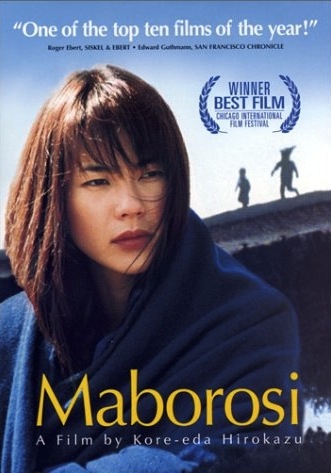
Maborosi 幻の光 (Maboroshi no hikari) Illusion [1995] • Japan

Continuing my exploration of Hirokazu Koreeda. This is another sad and gentle, lyrical film dealing with the themes of loss, death, and the soul. You have to be in the mood to let a film just float by, or wash over you in lilting waves to appreciate Maborosi. A couple of art house film techniques Koreeda employs might frustrate some viewers. One is the use of extremely long shots, in terms of time to a degree but mostly in terms of distance. His camera doesn't always foreground the focus of a scene but instead pulls back and observes it from afar. Sometimes very far. The second thing is that, with only a few exceptions, you never get a really good look at the faces of the actors, an aspect all the more remarkable given Koreeda's casting a fashion model in her film debut as the main protagonist. There is no vanity in this film. It's all bare naked emotion and gorgeous photography.

The film centers on Yumiko, played by Makiko Esumi the fashion model, whose husband apparently commits suicide by walking into an oncoming train three months after their first child is born. Koreeda establishes quickly, and beautifully, at the beginning of the film a very genuine and loving relationship between the couple so the viewer shares in Yumiko's confusion and pain in not knowing why he would kill himself. After a period of mourning Yumiko agrees to an arranged marriage and moves from Osaka with her son to a small fishing village where her new husband, a widower with a young daughter, has lived all his life. There are a few scenes which suggest Yumiko might have found happiness again but it doesn't last. The haunting inexplicability of her first husband's death is too strong for her to escape. The scene where Yumiko finally and completely breaks downs is framed and captured perfectly, but it's shot from about three hundred yards away.

The whole thing is more like a painting than a narrative film. The camera hardly ever moves. People don't say much and plot isn't really part of the equation. One thing I usually insist on when watching these slow-burn character studies with minimal dialog is access to the character's interior. What are they thinking and feeling? The most expressive entrance to someone's interior is their eyes, but as I've mentioned Koreeda shoots the film in such away we hardly know what the characters look like, let alone are we able to look into their eyes. Something else happens. We may not get a sense of what Yumiko is thinking or feeling but we have great sympathy for her. Her despair and inconsolable suffering are clearly shown.

Maborosi is the work of an artist, not someone with an interest in selling theater tickets. Koreeda's passion is exploring light and color and composition, and in exploring the themes of loss, death, and the nature of the soul. Yes, that's a polite way of saying a lot of people will find the film boring. So be warned. For those who like this kind of thing, and you know who you are, this is one of the good ones. It is so full of magnificently composed photography it will take your breath away.


Maboroshi is a Japanese term for illusion or mirage, and is often used in the tales of fishermen to describe a light that tempts them, without explanation, further out to sea. Maboroshi is the explanation given to Yumiko as to why her husband may have walked into the path of an oncoming train.

★★★★★
Director: Hirokazu Koreeda
Starring: Makiko Esumi, Takashi Naitô, Tadanobu Asano, Gohki Kashiyama, Naomi Watanabe

IMDb
Wikipedia
Asianmediawiki
Roger Ebert