Showing posts with label 2004. Show all posts

A Blue Automobile (Aoi kuruma) [2004] • Japan

This film has three things going for it: Aoi Miyazaki, Kumiko Aso, and a great soundtrack. Miyazaki and Aso are two of Japan's most talented and popular young actresses, and I'm always happy when a director shows good taste in music and uses it well—although the hip and evocative soundtrack used here sometimes seems a bit at odds with the slow paced art-house stylings of the film.

A Blue Automobile is a good looking film, very bleak, all stark and concrete, and there are a number of creative and interesting directorial choices made by Okuhara but the overall vision of the film left me wanting. That isn't always a problem but this film plays like it wants to be a film with a vision to talk about, an exploration of a heavy theme: pain, as a game changer. Indie actor cool dude Arata does a fine job as a young man who doesn't think much of living because of an accident as a child that has left him scarred around the eyes. He plays an introverted danger-punk guy, and we all know that fetching, young, good-hearted women are attracted to the type, so that's what plays out.

I was intrigued, fascinated even, by the characters as discreet units but wasn't able to engage or be moved by the exposition of the characters' motivations toward one another. It's basically another story about a guy who gets two women. And this time they are sisters, which adds to the oh-so-intense nature of the angst. That there's a big theme of immense suffering lurking in the background all the time doesn't make it much more than that, except it does make it "alternative".

The film has many bright moments and solid acting. It's not mainstream fare by a long shot, but fans of any of the three leads should enjoy watching them do their stuff. The film wants to be more than it is but it really doesn't matter. I enjoyed the experience of the film. It's one of those where you give more points to journey than goal.

★★★
Director: Hiroshi Okuhara
Starring: Arata, Aoi Miyazaki, Kumiko Aso, Tomorowo Taguchi, Kenji Mizuhashi

IMDb
Asianmediawiki
Japan Times

Girlfriend • Someone Please Stop the World [2004] • Japan

More Ryuichi Hiroki. This one is love story between a young woman photographer, Kyoko, who gets an assignment to pick a woman off the street and take nude photos of her for a men's magazine, and the woman who turns up as the subject of that assignment, Miho. Kiyoko's professional ethos is one of getting to know her subject deeply, be it a fruit plate or a human being, and as she does this she finds her interest in this particular subject, Miho, turning into fondness. The feeling is mutual, but this isn't a gay-themed film per se. There are just no barriers in the way that might prevent these two wandering souls from exploring each other, trying to find a positive relationship in a world they feel disconnected from, saddened by. The two performances are good enough, but not great, while the underlying drama and psychological trauma seem less satisfying.

I'm never quite happy with films that explore a lesbian liaison by setting up one of the participants as frustrated by bad relationships with jerkball men. It doesn't have to be that way. In this case it's Kyoko, but she has the personality of being frustrated by more than her bad boyfriends. She's a bit frustrated with herself and is trying to find a comfortable compromise between photography as art and photography as commerce. She's idealistic and a bit peculiar. When she meets Miho, who is angry about her father who left her family years ago and hasn't been in contact since, she meets someone who's more bummed out with life than she is so she's able to feel a little bit better about herself, and seems genuinely interested in, listening to Miho's stories. It's not unusual to become attracted to someone that makes you feel better about yourself.

Miho agrees to pose nude for Kyoko partly, well, mostly, as a means of getting back at, and getting the attention of, her father. I'm not sure about that as a method or as a solution but she's hurt and angry and she wants her father's attention. Kyoko and Miho are both presented as empathetic outsiders. Following them is a reasonably enjoyable romp in indie ennui but it doesn't wrap itself up into a grand story.

Girlfriend is part of the Love Collection, a loose series of DV shot features from 2004 with the common theme of love. Other entries include Kihatsusei no onna (A Volatile Woman) by Kazuyoshi Kumakiri, OLDK by Masahiro Hara, Nejirin bou by Tadashi Tomioka, Moon and Cherry by Yuki Tanada and Kokoro to karada by Hiroshi Ando.

★★★

Director: Ryuichi Hiroki
Starring: Aoba Kawai, Tomorowo Taguchi, Kinuwo Yamada, Kazuhiro Suzuki, Jason Gray, Aya Sugimoto
IMDb
Asianmediawiki
cinephilia101

This Charming Girl 여자, 정혜 (Yeoja, Jeong-hye) [2004] • South Korea

I sat for two hours loving this woman, and feeling sorry for her, hoping for her. That's what is supposed to happen when you watch a well-executed character study.

If you were to look up "boring art house film" in some film dictionary you might find the plot synopsis for This Charming Girl listed as the definition: The film follows Jung-hye’s quiet life and reveals the landscape of the character’s inner feelings.

Jung-hye has forged her own life out of simplicity and solitude as the result of some trauma earlier in her life. The film doesn't focus on what that trauma is or how Jung-hye may eventually resolve it. Instead, it focuses on the mundane life she has made for herself as a result. We watch her feed her cat, cook herself meals, go to a job at an uneventful workplace, go shopping for shoes. This is not an action movie. It's an extremely slow burn that leads to one very intense scene which involves a knife. It's an intense scene not because anything crazy happens but because we can see all of the repressed emotions inside this woman come boiling to the surface. And we can see this happening because Kim Ji-Su's performance is nothing short of phenomenal.

No use going into more detail about the events of the film. It's better to see them for yourself. If you like well-written, well-acted, meticulously directed character studies This Charming Girl is one of the best ones out there. Even though it is art house to the max, there isn't a pretentious moment in the film.

★★★★★
Director: Yoon-ki Lee
Starring: Jeong-min Hwang, Ji-su Kim, Mi-seong Kim

IMDb
Wikipedia
Asianmediawiki
HanCinema
Korean Film.org
Love HK Film
Japan Times 

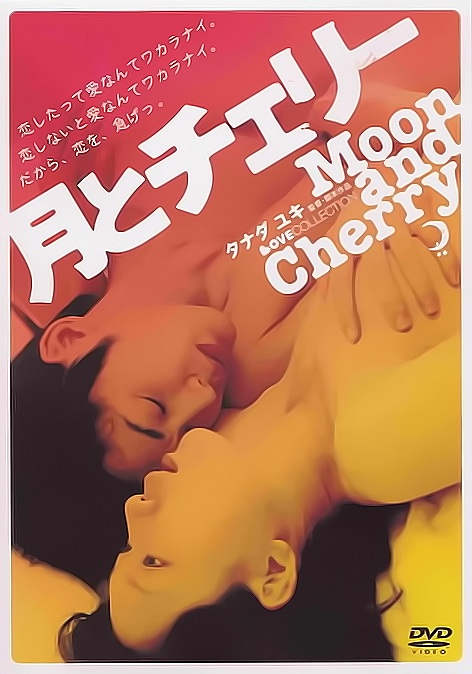
Moon and Cherry 月とチェリー (Tsuki to Cherry) aka Electric Button [2004] • Japan

Noriko Eguchi is one of my favorite actresses. She's had small parts in nearly fifty films in eight years. What's remarkable is that most of them have been reasonably high profile and critically well received, suggesting she has good intuition when it comes to selecting roles, and many of them are at the hands of Japan's best directors, suggesting they have good intuition when it comes to casting. She's not a box office draw, being much more a character actor than any idol-of-the-moment type, but she helps elevate every film she's in. Whenever she's onscreen she always appears smarter, stronger, deeper, and a little more enigmatic than everyone around her.

It's almost as if director Yuki Tanada wrote her first feature length film, Moon and Cherry, with Eguchi in mind. The film centers on the machinations of Mayama, played by Eguchi, as a member of a university erotic literature writing club. Mayama, its only female member, is the most talented and respected of the group because she's already been published, albeit under a male pseudonym. She's had sex with all but one of the other members of the group and uses the experiences as fodder for her writings. The film kicks into gear when a younger student, Tadokoro, joins the group. He immediately impresses the male members of the group with his knowledge of female anatomy, but just as he is swimming in their praise and accolades, Mayama walks in and says "Yeah, but you're a virgin." Experienced women can sense these things and Tadokoro is busted. Thus begins the intriguing gender role reversal story that is Moon and Cherry.

Mayama knows Tadokoro will make for good material so she takes him home to create some copy. The deflowering scene is controlled by Eguchi with aplomb, and in a moment of directorial panache, while Mayama is performing fellatio, we see Tadokoro biting his lip to the point of drawing blood. I don't need to spell out the brilliance of that metaphor. As soon as Mayama pops Tadokoro's cherry she jumps out of bed and starts writing. Tadokoro is befuddled but doesn't complain too much. As the relationship grows, Mayama sees Tadokoro's inexperience as an opportunity to try new things like sending an S&M dominatrix to his apartment and then demanding Tadokoro tell her all about it. She invites herself, followed by a pre-paid prostitute, to his place and then hides in his closet to watch the two of them go at it.

The only problem with completing this attempt at full on role reversal is the fact that Mayama is one of those women that men lose their minds over. There's no escaping that. Mayama has sex with Tadokoro in bed, on the floor, in the park, against a vending machine, but in between these events she disappears from his life. Tadokoro is torn but wants to make better use of his new found experience so he starts a relationship with a sweet and attractive co-worker, Akane, who serves as juxtaposition to Mayama. This sort of turns the film back on itself but I don't consider it a shortcoming at all.

Moon and Cherry is a very well-acted, creative and intelligent film that takes a different look at love, sex, and relationships. It's a low budget indie film shot on digital video as part of a Love Connections series of 2004 and it's a welcome opportunity to see the marvelous Noriko Eguchi star in a film. It's a smashing feature debut from writer/director Yuki Tanada who's gone on to script the female and visual extravaganza, Sakuran; write and direct Yû Aoi in One Million Yen and the Nigamushi Woman; and most recently write and direct the small masterpiece, Ain't No Tomorrows which I'll be reviewing soon.

A final shout out to newcomer Tasuku Nagaoka who plays Tadokoro with an awkwardly genuine sincerity. He's young and frail but never lets you think he won't make it, impressive in holding his own in scenes with the powerful Eguchi.

This could be a five star film but I don't think it wants to be. It wants to remain small and intimate. And independent. And even though it's one of the better films in recent memory, considered one of The Best of the Decade by a couple of the folks at Midnight Eye, I'm going to respect its wishes and give it four stars (with a stealth fifth star in the labels).

★★★★
Director: Yuki Tanada
Starring: Noriko Eguchi, Akira Emoto, Tasuku Nagaoka
Midnight Eye

Breathe In, Breathe Out 深呼吸の必要 (Shinkokyu no hitsuyo) [2004] • Japan

This is a feel good ensemble piece that doesn't do anything special except offer a couple hours quality time spent in Okinawa. The performances are all quite good despite a cliched script. It's about a group of six or seven people who are escaping something and come to cut sugar cane for a month in the countryside. When they are just hanging out and playing around it's a lot of fun but each time it tries to get dramatic and the characters reveal what it is they are escaping from, you gotta roll your eyes. It's not that big a deal, though. The discourses are short and the director seems to know that the drama isn't the selling point. It's the bonding of some drifting souls with each other and with their marvelous Okinawan host family. The film doesn't aim very high and is better for it because it does seem to hit right what it's aiming for. A nice diversion from more serious films.


★★★★
Director: Tetsuo Shinohara
Starring: Sayaka Kaneko, Karina, Saburo Kitamura, Sayaka Kuon, Masami Nagasawa, Hiroki Narimiya, Nao Omori, Shosuke Tanihara
IMDb 7.0/10 85 votes

49 great films from the Oughts (the first decade of this century)

Just for kicks.

[Rec] (2007)
The 40-Year-Old Virgin (2005)
Adrift in Tokyo (2007) aka Tenten
Antichrist (2009)
The Aura (2005) aka El Aura
Babel (2006)
Battle Royale (2000) aka Batoru rowaiaru
Blind Mountain (2007) aka Mang shan
City of God (2002) aka Cidade de Deus
The Equation of Love and Death (2008) aka Li mi de cai xiang
Eternal Sunshine Of The Spotless Mind (2004)
Eureka (2000) aka Yurîka
Green Tea (2003) aka Lü cha
Hero (2002) aka Ying xiong
Himalaya With Michael Palin (2004)
In The Mood For Love (2000) aka Fa yeung nin wa
Irreversible (2002)
The Isle (2000) aka Seom
Joint Security Area (2000) aka Gongdong gyeongbi guyeok
Let the Right One In (2008) aka Låt den rätte komma in
Lost in Translation (2003)
Lost Indulgence (2008) aka Mi guo
Love Exposure (2008) aka Ai no mukidashi
M (2007)
Memento (2000)
Memories of Murder (2003) aka Salinui chueok
A Moment to Remember (2004) aka Nae meorisokui jiwoogae
Mother (2009) aka Madeo
Next Door (2005) aka Naboer
No Country for Old Men (2007)
Noriko's Dinner Table (2005) aka Noriko no shokutaku
Oasis (2002)
One Fine Spring Day (2001) aka Bomnaleun ganda
Planet Earth (2006)
Queenadreena: Live (2006)
Requiem for a Dream (2000)
Secret Sunshine (2007) aka Milyang
Sideways (2004)
Snatch (2000)
Spider Forest (2004) aka Geomi sup
Stranger Than Fiction (2006)
Strawberry Shortcakes (2006)
Suicide Club (2002) aka Jisatsu saakuru
Summer Palace (2006) aka Yihe yuan
Synecdoche, New York (2008)
This Charming Girl (2004) aka Yeoja, Jeong-hye
The Unknown Woman (2006) aka La Sconosciuta
Visitor Q (2001) aka Bijitâ Q
What Time Is It There? (2001) aka Ni na bian ji dian

Letter from an Unknown Woman (Yi ge mo sheng nu ren de lai xin) [2004] • China • Xu Jinglei

Xu Jinglei, may I have some more, please? This film really excites me about Xu Jinglei. The directorial hand is very mature and accomplished. The film has a great period look and feel to it. The cinematography by Lee Pin Bing is gorgeous and I’m sure that helped. The acting is all quite good. Strange, then, to have to say that I didn’t thoroughly enjoy the movie. Again, as with Xu's directorial debut, My Father and I, it's the story that let me down. I know it's an old story, one I haven't read nor seen any previous adaptations of, but I think I can say that while it might look good on paper, in outline form, it doesn't fare very well in this particular presentation.

There may be some cultural nuances that were lost on me, and I do have to say that the subtitles that came with the film were really, really bad. The character development didn't seem secure enough for me to accept the first disappearance of the writer after the initial affair. Frankly, it shocked me. I went along with it for the sake of the story, but it left me twitching a little. Then when they meet again and the writer doesn't recognize the woman, I lost it. I can accept not recognizing someone with a different hairdo eight years later passing them on the street but once you've gotten to the naughty bits, I don't buy it. I imagine this is all nit-picky to a story about the sadness of an extremely one-sided love affair, but I wanted something to assure me that this one-sided love was warranted and I didn't get it.

I would recommend this film to anyone who enjoys a good love story. It's a beautiful film, and if you're not a lion in the tall grass, stalking, just waiting to pounce, like me, when you think that Xu Jinglei has failed in her exposition, the story is probably pretty good too. Stories for movies often come from outside sources but it ultimately falls on the director to tell the story in a convincing manner. Xu Jinglei, I'm officially a fanboy. Get to work.

★★★

A West Lake Moment (Yuan yang hu die) [2004] • China

This is a ONE STAR film without Zhou Xun. She is a joy to watch even with a co-star (Kun Chen) who is frighteningly bad here. He doesn't act as much as mug his way through the film like his appearance is a gift. The direction is silly at times with meaningless repetitive jump cuts and other random shenanigans. The script is immature and, frankly, stupid. The story sets up a charming and beautiful woman with an adorable best (male) friend (Yim Linq) who desires her and is good to her but she won't reciprocate because he's a few years younger than she is and she's got the hots for some pig of a selfish man (Chen). That's what his character is supposed to be, though, I'm not just dumping on the guy. This film not only resolves with the woman and the jerk getting together--without redeeming the jerkball at all--it also kills off the good guy! This is one gross male fantasy. Whoever wrote this movie is not someone I would like to meet.

The cinematography is beautiful at times and the location of the tea house is somewhere I'd like to sit and have tea but it's difficult to get behind such a disrespectful script.

★★

Butterfly (Hu die) (2004) • Hong Kong

The direction and cinematography are more ambitious than they need to be for this simple love story but not often to the point of distraction. It's very well acted by attractive actors. Josie Ho is gorgeous and understated. The tentativeness of her sexual reawakening has as much to do with her personality as it does with her gender. It's not padded by making the guy a jerk who would make any woman switch teams like is done in many western films about lesbian love. It's got politics too, as the younger pair exist amidst the Tiananmen square riots and massacre. Well done.

★★★★

Dead Girl Walking (Kaiki! Shinin shôjo) [2004] • Japan

Shot in deeply contrasted black and white, reminiscent of the silent film era (the soundtrack also conjures up that time), this forty minute short film is J-Horror as J-Horror does. Teenage Yuri appears to die of a heart attack and is pronounced dead but her body doesn't act like it. Her parents scold her for not behaving like a proper dead person and plug their noses from her decaying stench whenever she enters the room. They try to embalm and cremate her, much to her chagrin. Her body rots and limbs start falling off. She dreams it's all a dream.

★★★

The Uncertain Guest (El Habitante incierto) (2004) • Spain

The problem with this movie is it could have been written better. The hyper-expository monologues Claudia dishes out are so unrealistic I laughed. It's a sign of a director in trouble when he has to give lines to a character, for the sake of the audience, that can't be delivered organically by that character. Those plot-getting-in-the-way-of-the-story lines polluted an otherwise poetic, dream like, and metaphorical film. It's a beautiful essay on loneliness.

I would never call this film "Lynchy" ... which is just shorthand for "I don't get it but I liked it anyway ... I think. Didn't I? Did you?" David Lynch's films can be difficult. This film is just a beta release, ya know, like everything from google.

Hence, the sudden remake. El Habitante incierto is a brilliantly conceived film that should have been executed better so the director is taking a mulligan. That's cool. I look forward to it and hope he does a better job explaining Vera's sudden muteness upon being shot in the plot hole we all saw coming like an eighteen wheeler.

OK. She was shot in the mouth and it just took a couple days without food or water for her to get her voice back at film's end. Yeah, that's it.

I give the first half a 9, the second half a 5. Let's call it a 7 and anxiously await the do-over. It's a lovely film to look at and it frustrated me so much I'm going to watch it again and again until version 2 comes along.

★★★★

The Eye 2 (Gin gwai 2) (2004) • Hong Kong • Pang Bros.

Typical Pang Brothers: inventive camera-work, thoughtful sound design, well constructed scenes, a few jolts, and a story line that mixes fantasy, flashbacks, hallucinations and dreams with some present tense reality and impossible events (like jumping pregnant off a building roof and ending up with only a few scratches and a healthy baby). Call it a script.

No secret that the Pang Brothers have their own personal logic and/or they can't be bothered with cohesiveness to their stories as long as there's a general thrust of somebody doing something questionable so that the scaries can come after them until they fess up in some ambiguous way. I don't care. They do everything else well enough for me to enjoy their films.

A big pleasant surprise is anorexic super-model Shu Qi nails her part. She is beautiful and convincing.

There is no reason for this film to be called EYE 2 except for capitalizing on the success of the original EYE which dealt specifically with a blind person getting an eye transplant from ... drum roll please ... someone who didn't die right--the basis of most Asian horror--so they haunt until a remedy is found.

I'm pretty sure Shu Qi has 20/20 vision in this movie, but she is messing around with a married guy which causes his wife to commit suicide (she doesn't die properly) and comb her hair over her face, like a good Asian horror girl should, so she can effectively haunt the nasty mistress who is pregnant with her cheating husband's child.

The MIA husband of some other pregnant girl also haunts our heroine for some reason. I dunno.

They don't show it but at one point Shu Qi practically bites the face off some other guy. That was fun to think about.

★★★★

Closer (2004/I) • USA

Two actresses, who I've thought often appear near empty, give intriguing performances here. Natalie Portman sizzles in this film and Julia Roberts acts like she was made for her part. This is a smart and daring film that knifes its way through its characters' lives with razor sharp dialog. It's pretty obvious this film was developed for the stage before it made it to the big screen.

There are many films that explore intimacy, lying, infidelity and other difficulties that burden relationships, but Closer does it with a wounding honesty. There are a number of times in this film that one character will sling an accusation at another and then be trumped by the self-critical analysis of the recipient's retort. Everyone here struts around with a Machiavellian self-image except for Julia Roberts. Her power appears to come from a purity, an ideal that others point to as impossible, and it comes as no surprise that that ideal is easily deflated by the pressures exerted upon her. If you like your films smart and brutal, check this one out. Don't be put off by the beauty of its stars. They are all made pretty ugly in this picture.

★★★★

Spider Forest (Geomi sup) (2004) • South Korea

I had to watch this film once, visit the IMDb and read all I could from other folks attempting to explain it, then watch it again before arriving at a score of nine. The first viewing left me bewildered. The Spider Forest is a place where the souls of those who die alone or unloved live in limbo, as spiders, until someone remembers them. That's a cool premise. Then it's a story about murder and memories. The Spider Forest is also the cobwebbed memories each of us navigate as we attempt to deal with trauma, guilt, shame, etc., but in the Spider forest memories are erased and must be discovered anew.

This is one of those Korean films which could not exist or be told with a traditional narrative structure. There are shots and scenes that come out of nowhere and seem not to touch anything around them until much later in the film. This can be frustrating. So why watch it again? As one can imagine, these out-of-nowhere scenes look completely different after you've been to the end once. All the nuances of a simple story blossom the second time through. And the film is shot and played so well it's satisfying just looking at it. I wasn't confused while watching the film. Only when it was over and I tried to 'sum it up' did I find myself puzzled by loose ends.

The film is beautifully photographed and the acting top notch. Jung Suh, from Green Chair and The Isle is beautiful and captivating in a very understated performance in dual roles, which, by the way, is a huge spoiler (this info is absent from the credits) that doesn't spoil a thing.

This film is incredibly complex without being obtuse. It is more of a journey than a story. I will be watching it many more times.

★★★★★